Can Snake Plants Thrive Under Any Grow Light?
You’ve probably heard that snake plants are “impossible to kill,” but the truth is they’ll just sit there and do nothing if they don’t get enough light. That’s where a grow light for snake plant setups comes in, not as a fancy upgrade, but as a simple fix when your windows aren’t doing their job.
In our research, the sweet spot for a healthy snake plant sits around 100-200 PPFD (photosynthetic photon flux density) for about 12-14 hours daily. Most homes with north-facing windows or winter gloom fall well short of that mark. Let’s walk through exactly what your plant needs and how to deliver it without burning leaves or wasting money.
Quick Answer
A grow light helps a snake plant thrive when natural light is insufficient. Use a full-spectrum LED placed 6-12 inches above the leaves. Run it 12-14 hours daily with a timer.
Aim for 100-200 PPFD at leaf height. Snake plants tolerate lower light but grow better with this boost. Start with a low setting and increase gradually.
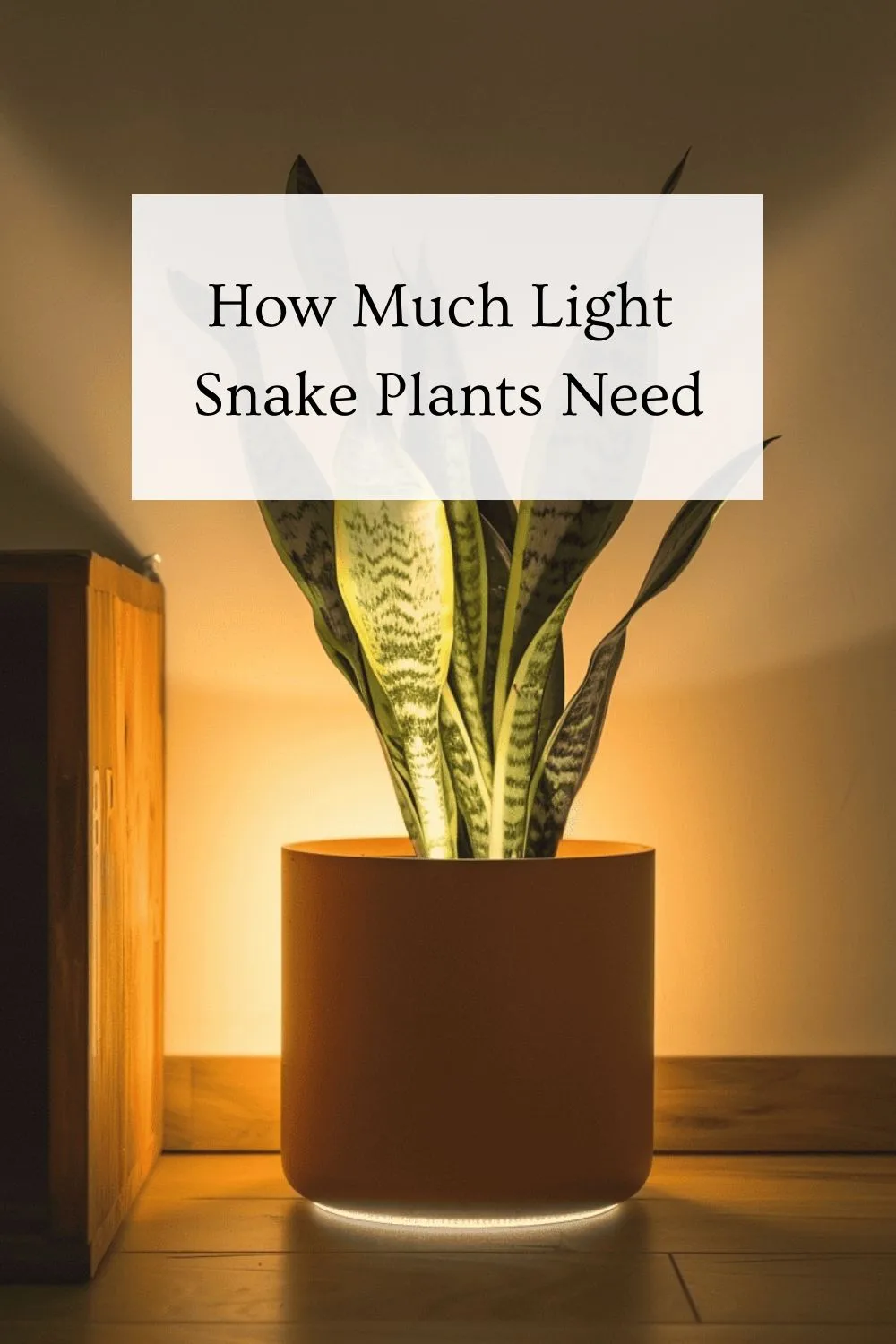
Image source: Web (Bing) / pinterest.com (Web image (fair-use with source credit))
The Simple Rule: Match the Light to Your Room, Not the Other Way Around
Here’s what most advice gets backwards. People buy a grow light first, then try to figure out where the snake plant goes. That approach wastes money and causes frustration.
The smarter move is to assess your room first. What light does your space naturally offer? Where does the plant actually live?
Only then do you pick the grow light.
Snake plants have a remarkably wide light tolerance. They’ll survive in a dim corner that would kill a fiddle leaf fig in weeks. But “survive” and “thrive” are two different things.
A snake plant in low light stops growing. The leaves stay the same size. No new pups appear.
It just exists, frozen in time.
Your goal with a grow light is to push that plant from surviving to actively growing. And that starts with understanding what your room gives you for free.
Start by checking your windows. A south-facing window in the northern hemisphere delivers the most light. East and west are moderate.
North-facing windows offer the least. If your snake plant sits more than 3 feet from any window, or if the window faces north, you’ve already got a case for a grow light.
The same goes for winter months. Even a bright room in June can drop to dim in December. Many people only need a grow light seasonally. If you are adjusting your plant care for colder weather, see our guide to how snake plants survive winter.
Others need it year-round. Your specific room determines the answer, not a generic rule.
Once you know what your room provides, you can pick the exact light that fills the gap. Nothing more, nothing less.
How Much Light Does a Snake Plant Actually Need?
Let’s get specific. A snake plant’s light requirement sits lower than most houseplants, but it’s not zero. Manufacturer specifications and horticultural research point to a target range of 100-200 PPFD for active growth.
PPFD measures how many photons hit a square meter each second. Think of it as the plant’s food delivery rate. Too few photons, and the plant can’t photosynthesize enough to grow new leaves.
Too many, and the leaves get stressed and burn.
Snake plants use a special type of photosynthesis called CAM (Crassulacean Acid Metabolism). They open their stomata at night to conserve water. This makes them more drought-tolerant and more light-efficient than regular plants.
They can photosynthesize with less light than most, but they still need a baseline.
Here’s what different light levels look like in practice:
| Light Level | PPFD Range | What Happens to Your Snake Plant |
|---|---|---|
| Very Low | Under 50 | Survives, no growth. Leaves may stay dark green but never produce new pups. |
| Low | 50-100 | Slow growth. New leaves may appear once or twice a year. Color remains okay. |
| Moderate | 100-200 | Active growth. New leaves every few months. Variegation (yellow edges) stays strong. |
| High | 200-400 | Fast growth but risk of leaf bleaching. Needs gradual acclimation. |
| Too High | Over 400 | Leaf burn, browning tips, stress. Not recommended without careful distance management. |
The takeaway is simple. If your natural light delivers under 100 PPFD at the leaf surface for most of the day, a grow light will make a real difference. And as of 2026, affordable PPFD meters and even smartphone apps can give you a decent reading without expensive gear.
Position matters too. Snake plants naturally grow upright, so the light should come from directly above. Side lighting makes the plant lean and look awkward.
Top-down mimics the sun and keeps the leaves straight.
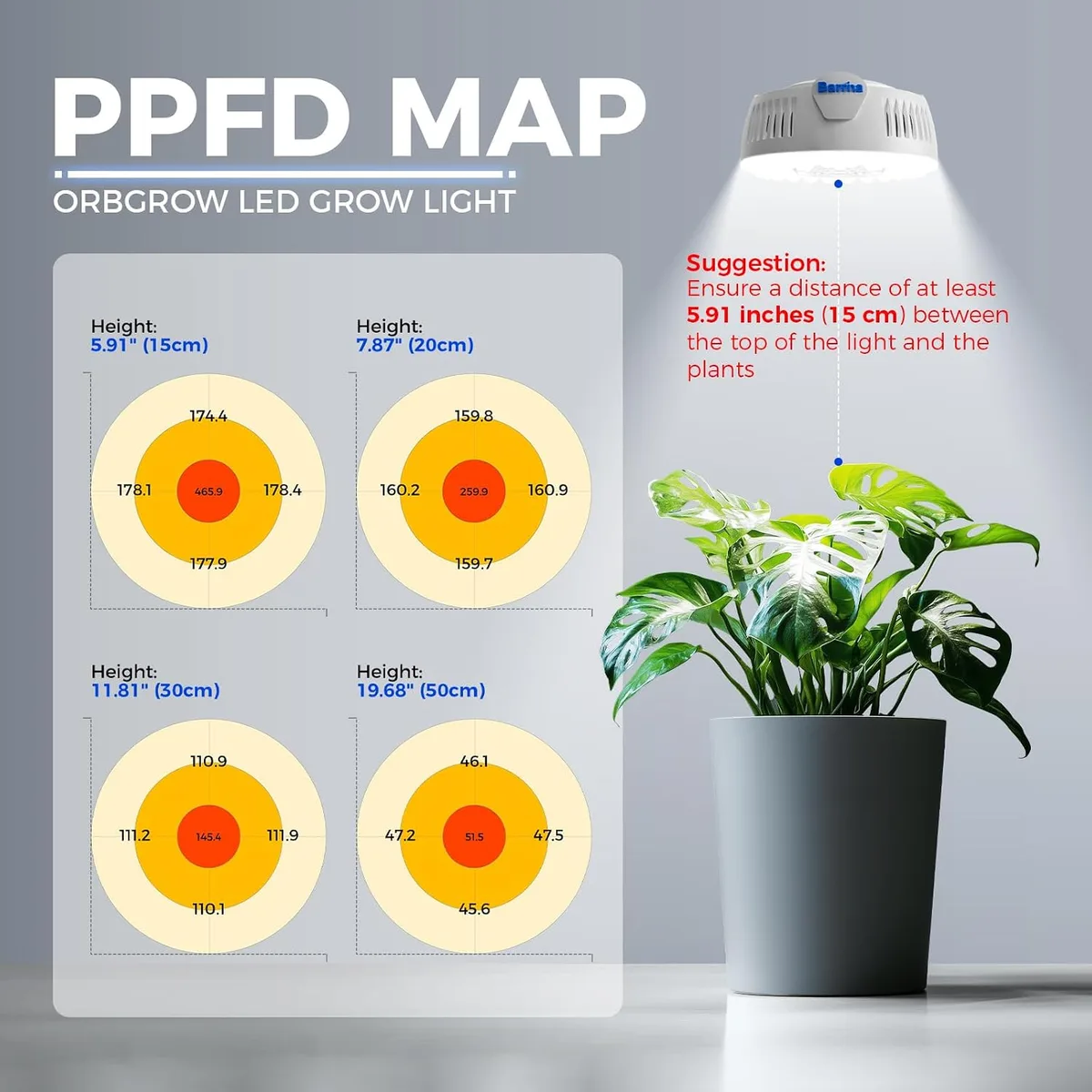
Image source: Web (Bing) / manuals.plus (Web image (fair-use with source credit))
If you’re curious about how natural sunlight compares, check out our detailed guide on snake plant light requirements for a room-by-room breakdown.
Step 1 – Check What You Already Have (Before Buying Anything)
Before you spend a cent, measure what your plant is currently getting. This step saves you from buying a light you don’t need or buying one that’s way too weak.
Grab your phone and download a free lux meter app. Place it at leaf height where the snake plant sits. Measure at noon on a clear day.
Then measure again on an overcast day. Average the two numbers.
Convert lux to PPFD using a rough multiplier. For sunlight, multiply lux by 0.015. So 10,000 lux equals roughly 150 PPFD.
This isn’t lab-grade accuracy, but it’s close enough to make a smart decision.
Here’s what your reading tells you:
| Your Reading | What It Means | What To Do |
|---|---|---|
| Under 5,000 lux | Very low light | Definitely need a grow light for active growth |
| 5,000-10,000 lux | Low light | Light helps. Plant survives but won’t thrive without boost. |
| 10,000-20,000 lux | Moderate light | Grow light optional. Only needed for propagation or winter. |
| Over 20,000 lux | Good light | No grow light needed. Plant will grow fine naturally. |
Also check how many hours of direct or indirect light the spot gets. Six hours of moderate light is better than two hours of bright light. Duration matters just as much as intensity. For a closer look at natural exposure, read our guide to how much sunlight snake plants need.
If your reading comes in under 10,000 lux for most of the day, you’re in the zone where a grow light makes sense. And if you’re seeing signs like snake plant not growing or leaves looking dull, that’s another clue your light levels need a boost.
One more thing. Check your plant’s soil and watering routine too. Sometimes what looks like a light problem is actually a watering problem. Our guide explains how often to water a snake plant as conditions change.
Overwatered snake plants in low light can’t dry out fast enough, leading to root rot. If you’re using a grow light, you might need to water slightly more often because the plant is photosynthesizing faster. Pair the light with the correct fluid level in the soil, and you’ll see real results.
Step 2 – Pick Your Setup: Three Common Scenarios
Now you know your room’s light level. Let’s match it to a setup. If you are new to growing this plant indoors, our snake plant care for beginners guide covers the other essentials.
Scenario A: Low-light apartment with no good windows
This is the most common situation. You live in a rental with north-facing windows, or your only window is blocked by a building next door. Your measured lux is under 5,000.
Your snake plant hasn’t grown in six months.
You need a dedicated grow light. A clip-on gooseneck light with a full-spectrum LED works perfectly for a single pot. Look for one with at least 10-15 watts actual draw.
Position it 6-10 inches above the tallest leaf. Run it 12-14 hours a day on a timer.
This setup costs $15-30 and will transform your plant. Within a month, you’ll see new growth. Within three months, new pups.
Scenario B: Decent natural light that needs a winter boost
Your room gets decent light in summer. Maybe an east-facing window that delivers 15,000 lux in July. But in December, that drops to 4,000 lux.
Your snake plant slows down every winter.
You don’t need a full-time grow light. A screw-in grow light bulb (full-spectrum, 9-12 watts) in an existing desk lamp or floor lamp works fine. Use it only from October through March.
Set the timer for 10-12 hours on winter days. In summer, turn it off and let the sun do the work.
This is the most cost-effective scenario. A single bulb costs around $10-15 and uses almost no electricity.
Scenario C: Propagating pups or growing multiple plants on a shelf
You have several snake plants or you’re propagating leaf cuttings. Maybe you’re growing different varieties like the tall ‘Laurentii’ and the compact ‘Moonshine.’ Your natural light is moderate but you want faster, more reliable growth.
Go with a panel or bar light. A 20-30 watt full-spectrum LED panel covers a 2×2 foot area. Mount it on a shelf above your plants.
Keep it 12-18 inches above the tallest pot. This gives consistent light across multiple plants without shadows.
This setup works great for propagation. Snake plant cuttings need more consistent light than mature plants. A panel light reduces the guesswork.
If you’re wondering about the best way to arrange multiple plants together, our guide on spider plant vs snake plant covers how different plants respond to shared light setups.
Step 3 – Compare the Grow Light Options That Actually Work
Once you know your scenario, it’s time to pick a specific light type. Not all grow lights are created equal. Here’s what actually works for snake plants.
Clip-on gooseneck lights
Best for: Single pots, small spaces, renters who can’t mount anything.
These are the most popular choice for good reason. They clamp onto a shelf, desk, or pot edge and bend to point directly at the plant. Most use USB power, so they work with any phone charger or power bank.
Look for one with a metal gooseneck, not plastic. Plastic droops over time. Metal holds position.
Also check that the head has enough LEDs to cover a 12-inch diameter circle. Single-LED heads are too weak.
Typical price: $12-25. Actual wattage: 8-15 watts. Lifespan: 25,000+ hours.
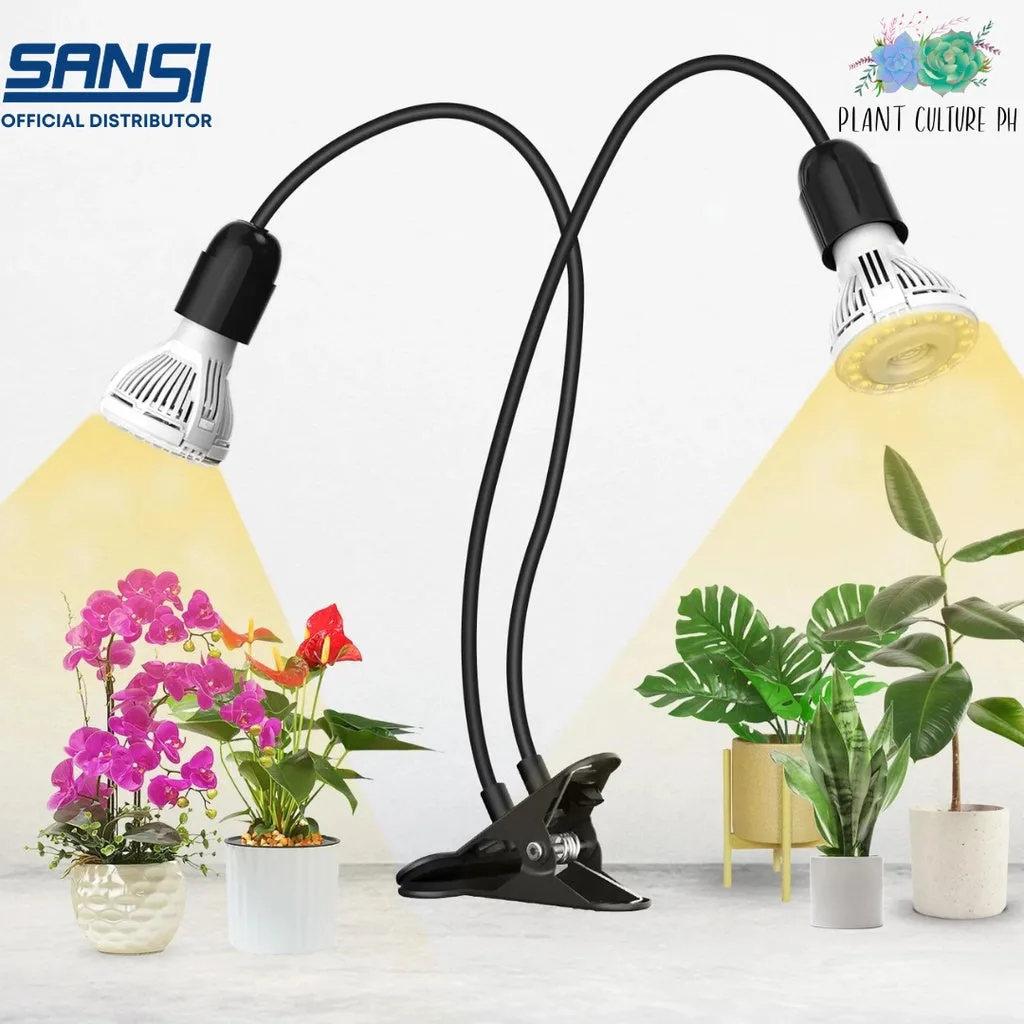
Image source: Web (Bing) / plantculture.com.ph (Web image (fair-use with source credit))
Stick or bar lights
Best for: Shelf setups, multiple plants in a row, propagation stations.
These are long rectangular lights that mount under a shelf or sit on top of a plant stand. They distribute light evenly across a wider area. Most come with adhesive strips or screw-in brackets.
The main advantage is even coverage. A single snake plant under a clip-on gets good light. Three plants in a row under a bar light all get the same amount.
No rotating needed.
Typical price: $20-40. Actual wattage: 15-30 watts. Lifespan: 30,000+ hours.
Screw-in grow light bulbs
Best for: Budget setups, existing lamps, seasonal winter boost.
This is the simplest option. Remove your regular bulb, screw in a grow light bulb, and you’re done. Use it in any standard lamp with a shade that directs light downward.
The catch is that screw-in bulbs are less efficient than dedicated grow lights. They produce more heat. And you can’t angle them precisely.
But for a $10 investment, they’re a great entry point.
Typical price: $8-15. Actual wattage: 9-12 watts. Lifespan: 15,000-25,000 hours.
Full panel lights
Best for: Large collections, serious plant parents, grow tents or enclosed shelves.
These are the most powerful option. A full LED panel covers a 2×3 foot area or more. They produce enough light for multiple snake plants plus other low-light plants.
Most panels include a dimmer and separate switches for blue and red channels. For snake plants, run both channels at full or near-full. The dimmer is useful for acclimating new plants or reducing intensity if you see leaf stress.
Typical price: $40-100. Actual wattage: 30-60 watts. Lifespan: 50,000+ hours.
Here’s a quick comparison:
| Type | Best For | Wattage | Price Range | Coverage |
|---|---|---|---|---|
| Clip-on gooseneck | Single pot | 8-15W | $12-25 | 1 plant |
| Stick/bar light | Shelf row | 15-30W | $20-40 | 2-4 plants |
| Screw-in bulb | Existing lamp | 9-12W | $8-15 | 1 plant |
| Full panel | Large collection | 30-60W | $40-100 | 4-8+ plants |
For most people, the clip-on gooseneck is the right starting point. It’s cheap, effective, and doesn’t require any permanent setup. If you find yourself adding more plants later, you can graduate to a bar or panel.
The Specifics That Matter (and the Ones You Can Ignore)
Grow light marketing is full of numbers that look important but don’t actually help. Let’s separate what matters from what’s just noise.
What matters: Actual wattage
Ignore “equivalent wattage” that compares to old incandescent bulbs. Look for the actual power draw. For snake plants, 10-20 actual watts is plenty for a single plant.
Anything above 30 actual watts is overkill unless you have multiple plants.
What matters: PPFD at distance
The PPFD number at a specific distance tells you how much usable light reaches the plant. A light that delivers 150 PPFD at 12 inches is perfect. One that needs to be 4 inches away to hit 150 PPFD is less useful because the coverage area shrinks.
What matters: Timer compatibility
Snake plants need consistent day/night cycles. A light with a built-in timer or a separate outlet timer is essential. Without it, you’ll forget to turn the light off, and the plant needs those dark hours.
What you can ignore: “Full spectrum” claims
Almost all modern LED grow lights are full spectrum. The term is marketing fluff at this point. Any white LED between 3000K and 6500K works fine for snake plants.
Warm white (3000K) is slightly better for flowering plants, cool white (6500K) is slightly better for foliage. Snake plants don’t care either way.
What you can ignore: Red and blue channels
Some lights let you switch between blue-only, red-only, or both. For snake plants, just run both channels at full. The separate switches are for cannabis growers who want to fine-tune flowering.
Snake plants are simpler.
What you can ignore: Blurple lights
Those purple-colored grow lights that make your room look like a nightclub? Skip them. They’re less efficient than white LEDs, harder to live with visually, and snake plants don’t need the extreme red/blue ratios they deliver.
Stick with white light. Your eyes will thank you.
If you’re managing multiple plants and want to avoid common care mistakes, take a look at our guide on snake plant disadvantages for things that can go wrong even with perfect lighting.
Mistakes That Burn Leaves or Waste Money
Even with the right light, it’s easy to mess things up. These are the most common mistakes we see in user reports and forum threads.
Distance error: Too close or too far
This is mistake number one. People either cram the light two inches from the leaves and burn them, or put the light three feet away and wonder why nothing changes.
For most clip-on lights, 6-12 inches is the sweet spot. For panels, 12-24 inches. The exact distance depends on the light’s power.
Start at the far end of the range and move closer if you see no growth after two weeks. Move farther if you see brown tips or pale leaves.
Duration error: Leaving the light on 24/7
Snake plants need darkness. Their CAM photosynthesis actually takes in carbon dioxide at night. If you never turn the light off, you disrupt that cycle.
Twelve to fourteen hours on, ten to twelve hours off. Use a timer. Don’t trust yourself to remember.
Acclimation error: Going from dim corner to bright light overnight
If your snake plant has been sitting in a low-light corner for months, it needs time to adjust to a grow light. Start with 6 hours a day for the first week. Add 2 hours each week until you reach 12-14 hours.
This prevents leaf shock and burning.
Spectrum error: Using old red/blue blurple lights
Blurple lights were popular a decade ago. They’re outdated now. Modern white LEDs are more efficient, produce better growth, and don’t make your living room look like a submarine control room.
Buy a white full-spectrum light.
Heat error: Using old fluorescent or incandescent lights
Fluorescent tubes and incandescent bulbs produce significant heat. Get them too close to a snake plant, and you’ll cook the leaves. LED lights run cool.
They’re the only sensible choice for indoor plants as of 2026.
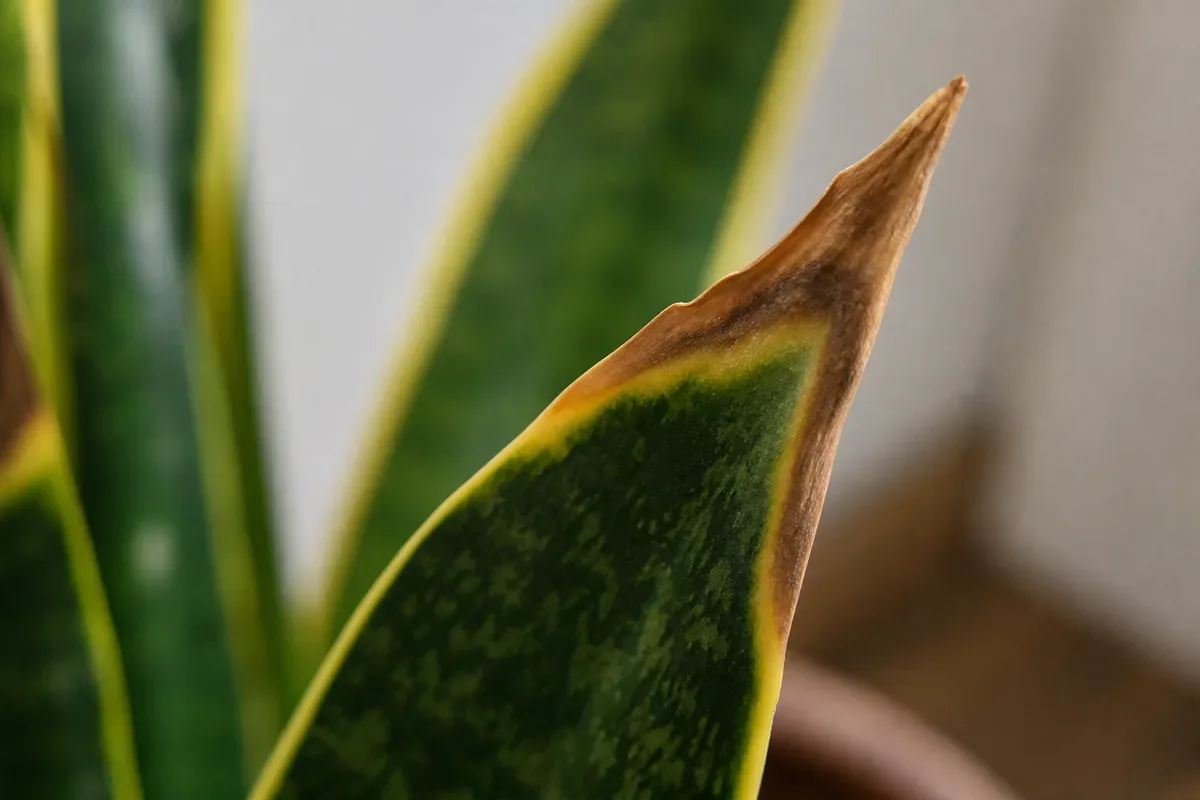
Image source: Bing (Web (fair-use with source credit))
If you’re already seeing yellow discoloration, our guide on snake plant yellow leaves can help you distinguish light stress from watering problems.