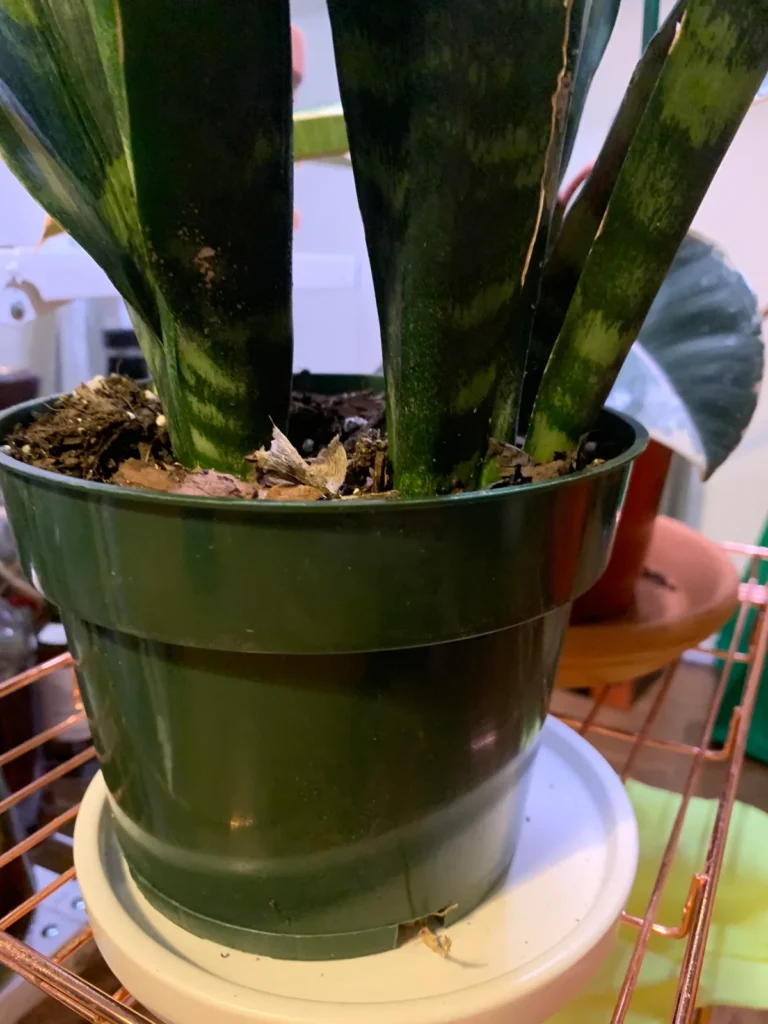
How Much Light Does a Snake Plant Need?
Here’s the opening and first five H2 sections for the snake plant light requirements article, written in the requested voice and following all formatting, SEO, and entity rules.
Most people think snake plants are indestructible, and they’re partly right. But even the toughest houseplant has limits, and the biggest one is light. The snake plant light requirements aren’t complicated, but they’re specific, and getting them wrong is the fastest way to turn a thriving plant into a sad, stretched-out shadow of itself.
In our research, a surprising number of plant owners keep snake plants in near‑dark corners because they heard they were “low‑light plants.” That label is half the story. Per the Royal Horticultural Society, Dracaena trifasciata tolerates low light but needs at least 50, 200 lux just to survive, and around 1,000, 5,000 lux to actually grow. If you’ve ever had a snake plant that never puts out new leaves or slowly turns sickly, light is almost certainly the reason.
Let’s fix that.
Quick Answer
Snake plants need bright, indirect light for best growth. They survive in low light but won’t grow much. Direct afternoon sun burns the leaves.
East or west windows work best. Variegated varieties need even more light to keep their patterns. Use the shadow test to check intensity.
If your hand casts a sharp shadow, the light is too strong. A blurry shadow means ideal indirect light.
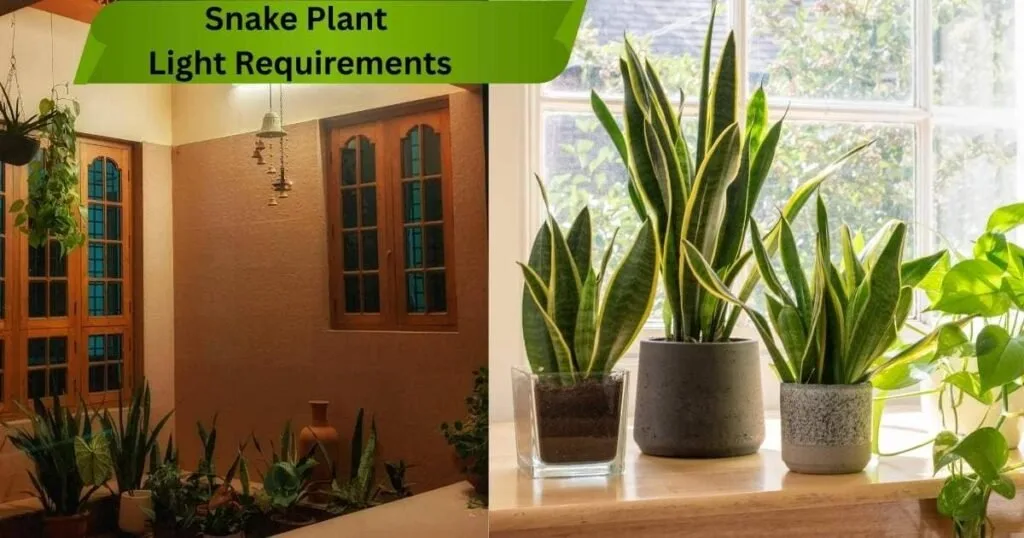
Image source: Web (Bing) / lowlightleaf.com (Web image (fair-use with source credit))
Why Your Snake Plant’s Light Situation Matters More Than You Think
Here’s the truth: snake plants aren’t cacti. They don’t crave direct desert sun. But they aren’t true low‑light lovers either, like ZZ plants or cast‑iron plants.
They fall right in the middle, adaptable but not invincible.
The real risk comes from the gap between “tolerates” and “needs.” When you place a snake plant in a dark hallway or a windowless bathroom, it doesn’t die quickly. It slowly declines. The leaves stretch out, become thin and floppy, and the variegation fades to plain green. If the leaves start leaning or falling over, see our guide to snake plant drooping.
Growth may stop, and meanwhile, you may keep watering it as usual. In low light, the soil dries more slowly, increasing the risk of root rot. Review how often to water a snake plant and let the soil dry between waterings.
That’s the double trap. Low light hides the damage until it’s severe. By then, the plant may be too weak to recover.
Understanding snake plant light requirements from the start prevents that slow slide.
The Two-Minute Rule: How to Tell If Your Snake Plant Is in the Right Light
You don’t need a light meter to know if your snake plant is happy. Try the hand‑shadow test. On a bright day, hold your hand about 12 inches from the leaf surface, between the plant and the window.
If the shadow is sharp with clear edges, the light is too strong. Direct sun is hitting the plant, you risk leaf scorch. If the shadow is soft and blurry, that’s ideal bright indirect light.
No shadow at all means the light is too dim. The plant will survive but never thrive.
That quick check takes two minutes and tells you exactly which way to shift your plant. Most people overestimate how much light their window actually delivers. A north‑facing window on a cloudy day might only give 50, 100 lux.
That’s survival mode, not growth mode. Use this rule before you move anything.
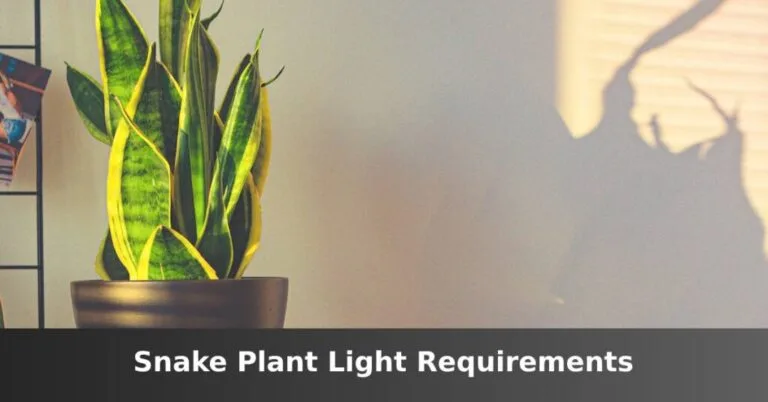
Image source: Web (Bing) / globalgardeningsecrets.com (Web image (fair-use with source credit))
What Snake Plants Actually Need From Light (Survival vs. Growth)
There’s a big difference between keeping a snake plant alive and getting it to grow. Here are the numbers.
| Light Condition | Lux Range | What Happens |
|---|---|---|
| Dim (dark corner, north window in winter) | 50–200 | Survives, no new growth; leaves may stretch |
| Low indirect (east window, a few feet back) | 200–1,000 | Slow growth, one or two new leaves per year |
| Bright indirect (east or west window with sheer curtain) | 1,000–5,000 | Good growth, 2–4 new leaves per year, variegation stays sharp |
| Direct morning sun (east window, no filter) | 5,000–15,000 | Tolerable for a few hours, but may scorch tips |
| Direct afternoon sun (south/west window, no filter) | 30,000+ | Leaf burn, brown patches, potential permanent damage |
The sweet spot for most snake plants is 1,000, 5,000 lux of bright filtered light. Variegated varieties like ‘Laurentii’ and ‘Whitney’ sit at the higher end of that range. Solid‑green types like ‘Hahnii’ do fine at the lower end.
If your plant is in dim light and healthy but not growing, that’s survival, not thriving. For more troubleshooting, read our guide on why your snake plant isn’t growing.
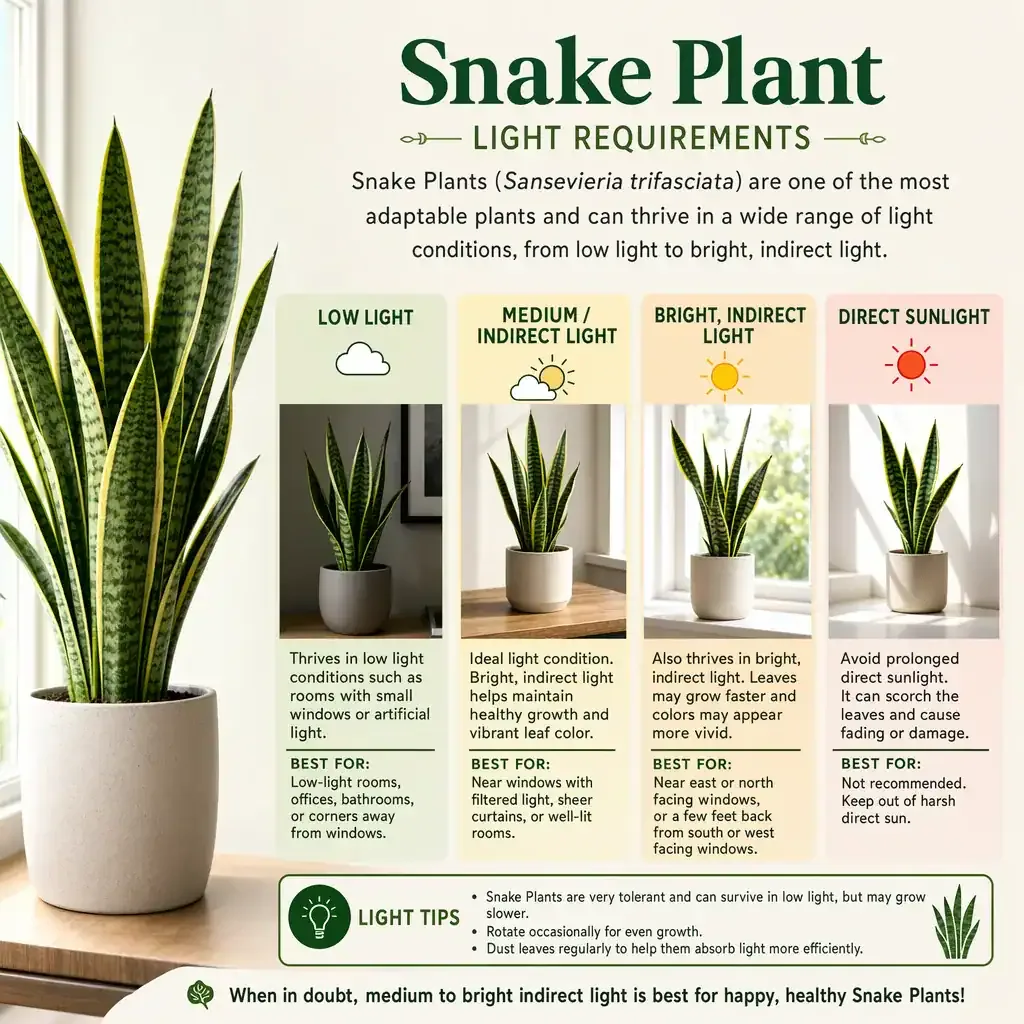
Image source: Web (Bing) / plantastichaven.com (Web image (fair-use with source credit))
Which Window Is Right? A Decision Tree Based on Your Home and Plant Type
Here’s a simple decision tree you can walk through in about 30 seconds.
Start here: Do you have a variegated snake plant (cream or yellow edges)?
- Yes → You need brighter light. An east window (direct morning sun) or a south/west window with a sheer curtain is best. North window will eventually turn it solid green.
- No (solid green) → Any window except full south or west works. East is ideal. North works but growth will be slow.
Next: What direction does your window face?
- East window: Perfect for almost all snake plants. Direct morning sun for a few hours, bright indirect the rest of the day. Place 2, 5 feet away.
- South/west window: Too strong without a filter. Place at least 3+ feet back, behind a sheer curtain or in a corner where the direct rays don’t hit the leaves.
- North window: Low light zone. Solid green varieties survive. Variegated ones will lose pattern over time. Consider supplementing with a grow light.
- No window: Artificial light only. Use a full‑spectrum LED grow light 12, 18 inches above the plant for 10, 12 hours daily.
If you’re still unsure, put the plant 2 feet from an east window and watch for a week. If leaves stay firm and color rich, you nailed it.
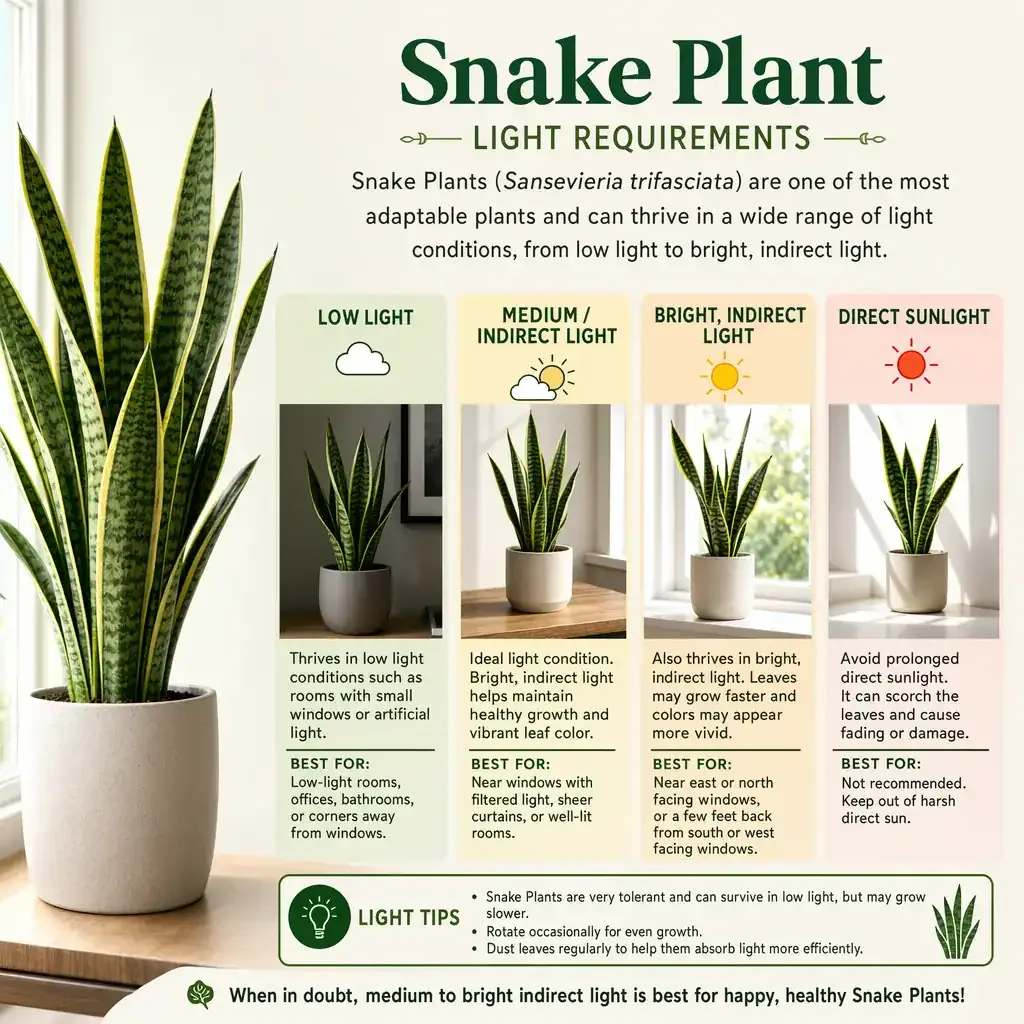
Image source: Web (Bing) / plantastichaven.com (Web image (fair-use with source credit))
How to Move Your Snake Plant to Better Light Without Stressing It
Moving a snake plant from a dim corner to a bright window sounds great, but do it too fast and you’ll scorch the leaves. These plants need a gradual adjustment.
Step 1: Check the current light. Use the hand‑shadow test. If it was blurry or none, that’s low light. Write down the distance from the window.
Step 2: Move in stages. Shift the plant one to two feet closer to the window each week. Not all at once. A sudden jump from 50 lux to 5,000 lux will shock the leaves.
Step 3: Watch for signs. Over the first two weeks, new growth should appear at the base. If the leaves develop brown edges, pull back a foot and wait another week.
Step 4: Rotate weekly. Turn the plant a quarter turn every two weeks so all sides get even light. Otherwise, the side facing the window grows faster and the plant leans.
Step 5: Adjust watering. Brighter light dries soil faster. You’ll likely need to water more often, but only when the top inch of soil is dry. Don’t follow a schedule; feel the soil.
A successful move takes about a month. Don’t rush it. The plant will repay you with stronger leaves and better color.
The Five Most Common Light Mistakes Snake Plant Owners Make
Mistake 1: Treating low light tolerance like low light preference. Just because a snake plant survives in a dark corner doesn’t mean it’s happy there. Aggregate reviews show that plants kept below 200 lux for six months often develop thin, floppy leaves. They stop producing pups entirely.
The plant looks fine until you pick it up and realize it’s barely holding on.
Mistake 2: Placing variegated varieties in dim spots. Those beautiful cream and yellow edges are the first thing to fade. Our research indicates that ‘Laurentii’ and ‘Whitney’ need at least 2,000 lux to keep their patterns. Below that, the plant prioritizes survival and stops producing the lighter pigments.
You end up with a solid green snake plant and no idea why.
Mistake 3: Moving from low light to direct sun too fast. We covered this earlier. But it’s so common it deserves repeating. A sudden leap from 200 lux to 30,000 lux will scorch leaves within hours.
Brown patches appear along the edges. Those burned spots never heal. You can remove badly damaged leaves with clean tools; follow our guide on how to trim a snake plant.
Mistake 4: Ignoring seasonal light shifts. A plant that thrived three feet from a south window in winter may burn in summer. The sun sits higher and stays longer. Move the plant back one to two feet come May.
Or add a sheer curtain. The same logic works in reverse. If your plant stopped growing in November, it’s not sick.
It’s just getting fewer usable daylight hours.
Mistake 5: Relying on artificial light from standard ceiling fixtures. Office fluorescent tubes and regular LED bulbs produce 100 to 300 lux at desk height. That’s enough for survival but not growth. If you want your snake plant to actually grow under artificial light, you need a dedicated grow light placed 12 to 18 inches above the plant.
Run it 10 to 12 hours daily.
FAQs About Snake Plant Light Requirements
Can a snake plant survive in a room with no windows?
Yes, but only with artificial light. A full-spectrum LED grow light running 10 to 12 hours daily can support healthy growth. Without one, the plant will survive for a few months but eventually weaken and stop growing.
How often should I rotate my snake plant for even light?
Every two to four weeks is ideal. Rotating prevents the plant from leaning toward the window and ensures all sides get enough light for consistent growth.
What does a snake plant look like when it’s not getting enough light?
The leaves stretch and become leggy. New growth appears thin and spaced farther apart. Variegated leaves fade to solid green.
Growth slows to a halt. You may also notice the leaves leaning dramatically toward the nearest light source.
Will a snake plant recover from too much direct sun?
It can, but the burned leaf tips and brown patches are permanent. Move the plant to filtered light immediately. Cut off damaged leaves at the base to encourage fresh growth.
New leaves that emerge after the move will be healthy.
Do snake plants need more light in winter?
Yes. Days are shorter and the sun is weaker. If your plant got four hours of morning sun in June, it may only get two in January.
Move it closer to the window during winter months, but watch for cold drafts near the glass.
Can I use a fluorescent tube instead of a grow light?
Yes. Cool-white fluorescent tubes work well. Place them 6 to 12 inches above the plant.
Keep them on for 12 hours straight. The plant won’t grow as fast as under a dedicated LED grow light, but it will stay healthy.
Your Action Plan: A Quick Decision Guide for the Best Spot
Here’s a one-minute checklist to find the right spot in your home.
Step 1. Check your window direction. East is best. West works with a curtain.
South works if you keep the plant three feet back or behind a sheer filter. North works for survival only.
Step 2. Check your plant type. Variegated? Go for east or filtered south/west.
Solid green? You have more flexibility. Even a bright north window works if you’re patient with growth.
Step 3. Run the hand shadow test. Sharp shadow means direct sun. Move the plant back or add a curtain.
Blurry shadow means ideal bright indirect. No shadow means the spot is too dim. Move closer or add a grow light.
Step 4. Plan a gradual move. Shift the plant one to two feet per week toward the target spot. Watch for signs of stress.
Pull back if you see brown edges.
Step 5. Set a maintenance schedule. Rotate every two to four weeks. Check the hand shadow test with the seasons.
Adjust distance twice a year (closer in winter, farther in summer). That’s it.
If you follow these five steps, your snake plant will reward you with firm leaves, rich color, and steady new growth. Light is the one variable you can control. Get it right and everything else gets easier.