How to Trim Snake Plant: Easy Step-by-Step Guide for 2026
If you are wondering how to trim a snake plant, the answer depends on why you are cutting. The wrong move can stop new growth or invite rot. So before you grab scissors, ask yourself one question: what is the problem you are fixing?
Manufacturer guidelines and university extension research both confirm that snake plants can reach 4 feet indoors and live for decades with proper care. Trimming is a routine part of keeping them healthy and looking sharp. Let us walk through the decision tree so you make the right cut every time.
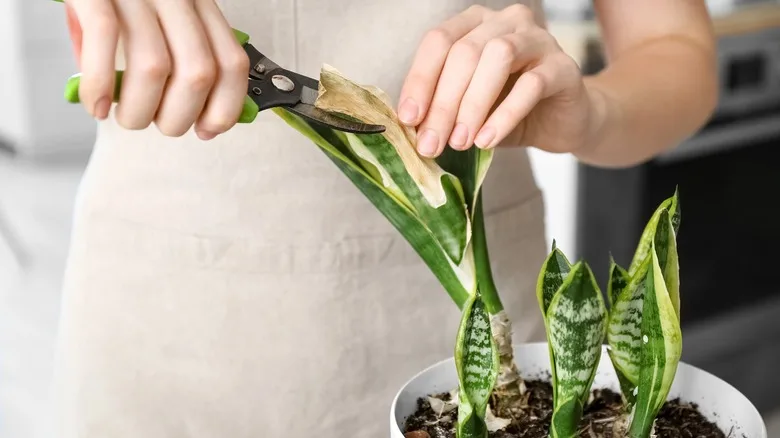
Image source: Web (Bing) / housedigest.com (Web image (fair-use with source credit))
Quick Answer
Trim brown tips with a clean 45‑degree V‑cut. Remove damaged or diseased leaves at the base, flush with the soil. Cut tall, healthy leaves 4 to 6 inches above the soil for propagation.
Always sterilize your blade first. Water sparingly after trimming. Never cut below the soil line.
Why You Are Trimming: The First Decision
Image source: Web (Bing) / pinterest.com (Web image (fair-use with source credit))
Every snake plant leaf tells you what it needs. You just have to read the signals. Here are the four most common scenarios and the correct cut for each.
Brown Tips Only (V‑Cut)
Brown tips usually come from dry air, tap water chemicals, or irregular watering. The rest of the leaf is still green and functional. So you only need to reshape the tip.
Make a V‑shaped cut that follows the natural leaf contour. Angle the scissors about 45 degrees so water runs off the cut. Leave at least 0.5 inches of green above the brown area.
This keeps the leaf looking natural and prevents further die‑back.
Damaged or Diseased Leaf (Full Base Cut)
If a leaf has a yellow spot, black mushy area, or a deep physical tear, it will not heal. The damage spreads. Cut that leaf off at the base, right where it emerges from the soil.
Use a sterile blade and cut as low as possible without digging into the soil. If the leaf is rotted at the base, you may need to remove the plant from its pot, cut away the rotten section, and repot in dry soil. This stops the infection from moving into the rhizome.
Too Tall or Leaning (Top Cut for Propagation)
Snake plants can get top‑heavy and tip over. Or they might crowd a low light spot. In that case, you can cut the leaf at a point 4 to 6 inches above the soil and use the top piece as a cutting.
The remaining stub will not regrow from the cut tip. Instead, the plant will push new shoots from the rhizome. That is a good trade‑off if you want more plants or need to control height.
Removing Yellowing or Old Leaves (Rhizome Cut)
Old outer leaves naturally yellow and die back. Cut them at the base as well. This redirects energy to younger leaves and keeps the plant looking tidy.
Never pull a yellow leaf off by hand. The rhizome can tear. Always use a clean snip.
How to Trim Snake Plant Leaves the Right Way
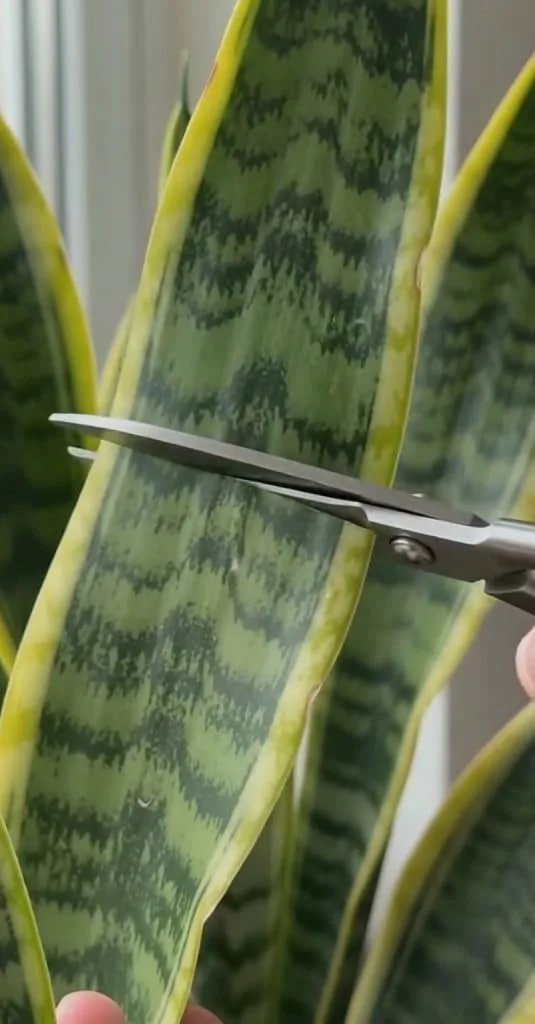
Image source: Web (Bing) / easyyum.familyfreshrecipes.com (Web image (fair-use with source credit))
Now that you know which cut to make, here is the proper technique for each one.
Tools and Sterilization
Use sharp pruning shears or household scissors. Dull blades crush the leaf tissue and invite infection. Sterilize the blade with 70% isopropyl alcohol for at least 30 seconds.
Wipe it clean between cuts if you are trimming multiple leaves.
Wear gloves if you have sensitive skin. Snake plant sap contains saponins that can irritate.
The V‑Cut Technique for Brown Tips
Hold the leaf firmly. Position your scissors so the cut forms a shallow V, not a flat line. The V should mimic the leaf’s natural taper.
Cut about 1/8 inch below the brown margin. Leave enough green so the leaf looks full. Do not cut into the healthy green tissue more than necessary.
A V‑cut heals faster and looks better than a blunt straight cut.
The Base Cut for Leaf Removal
Follow the leaf down to the soil line. You may need to lift the leaf slightly to see where it connects to the rhizome. Snip as close to the soil as possible without cutting into the dirt.
If the leaf is wide and tough, use a rocking motion to cut through. Pull the removed leaf straight up and out. Dispose of it immediately if it was diseased.
The Propagation Cut (Turning Tall Leaves into New Plants)
Cut the leaf at a 45‑degree angle about 4 to 6 inches above the soil. Let the cut end callus for 1 to 2 days in a dry, warm spot. Then place the cutting in a jar with the bottom 1 inch in water.
Change the water weekly. Roots usually appear in 3 to 6 weeks.
You can also root the cutting directly in moist potting mix. Callus it first, then plant it 1 inch deep. Do not water the soil for at least a week.
What to Do After a Trim
The work does not stop when the cuttings hit the compost bin. The plant needs adjusted care for the next few weeks.
Watering Adjustments for Freshly Cut Plants
Less leaf mass means less water evaporation. So the soil will stay wet longer. Overwatering after a trim is the number one cause of root rot.
Wait until the top 1 to 2 inches of soil are bone dry before watering. If you trimmed off a lot of leaves, cut your normal watering by half until you see new growth. That could take 2 to 4 weeks.
Letting Cuttings Callus Before Propagating
Do not stick a freshly cut leaf end straight into water or soil. The open wound is a magnet for bacteria. Let the cut end dry out and form a hard callus.
This usually takes 1 to 2 days in a warm, dry spot with indirect light.
Once callused, the cutting can go into water or dry potting mix. Skip the rooting hormone, snake plants root easily without it.
Common Trimming Mistakes That Hurt Your Plant
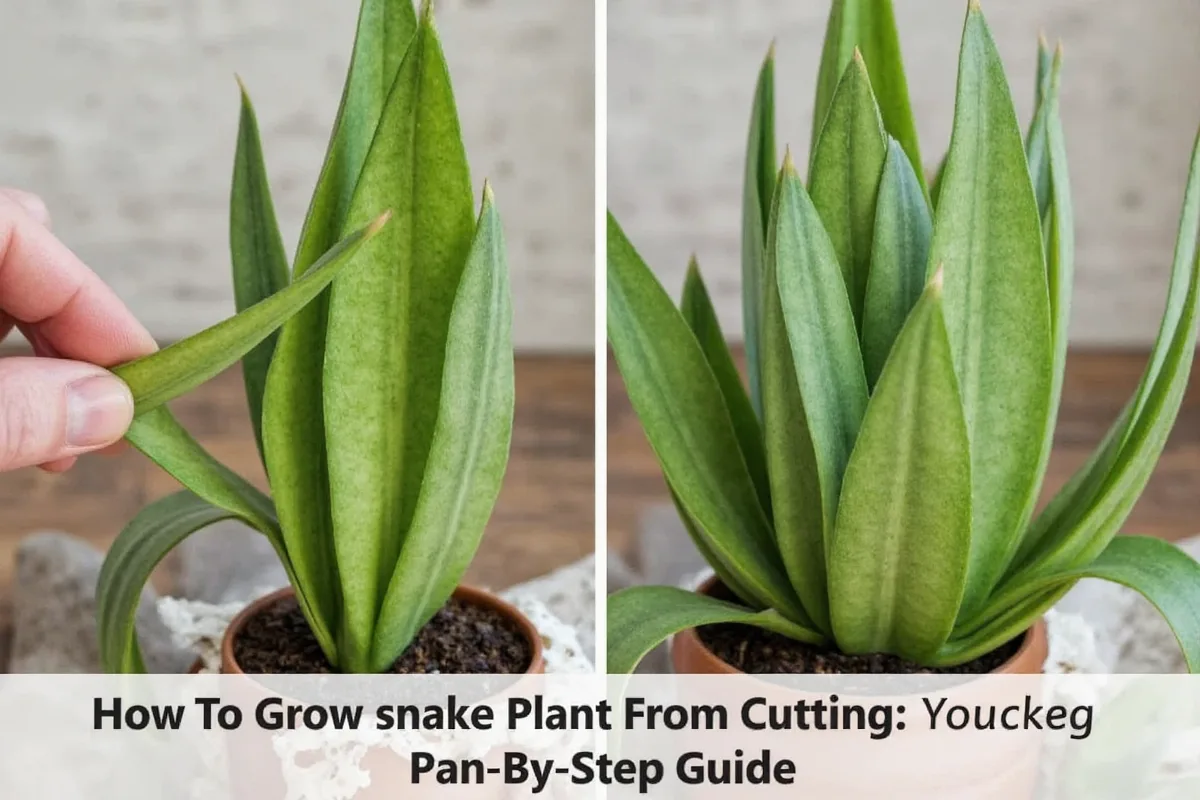
Image source: Web (Bing) / plantin.alibaba.com (Web image (fair-use with source credit))
Even experienced plant owners make these errors. Here is what to avoid.
Cutting Too Low (Killing the Growth Point)
If you cut a leaf below the soil line, you can sever the rhizome where new shoots form. That leaf is gone, but the plant may lose its ability to produce replacements.
Always cut at the base, but above the soil. You want to remove the leaf without damaging the growth crown. If you accidentally cut into the rhizome, dab the wound with cinnamon powder to prevent rot.
Using Dirty or Dull Blades
A dull blade crushes the leaf and leaves a ragged edge. Bacteria enter through those tears. A dirty blade can carry fungal spores from one leaf to the next.
Clean your blades with rubbing alcohol before every trimming session. Replace dull shears. A sharp, clean cut heals in days.
A ragged cut can rot for weeks.
Overwatering After the Trim
You removed a lot of leaf area. The plant takes up less water. If you keep the same watering schedule, the soil stays wet too long.
Roots suffocate and rot.
Wait for the soil to dry deeper than usual. For a heavily trimmed plant, you might not need to water for 10 to 14 days. Watch for signs of thirst like slightly wrinkled leaves instead of sticking to a calendar.
When to Leave the Leaf Alone
Not every mark on a snake plant leaf calls for scissors. Sometimes the best trim is no trim at all.
Why Not Every Bent or Scratched Leaf Needs Cutting
Minor surface damage does not spread. A small scratch, a crease from a bump, or a pale spot from sun stress will not kill the leaf. The plant still photosynthesizes through the green tissue.
Cutting away a mostly healthy leaf for cosmetic reasons stresses the plant. It also removes leaves that store energy and water. University extension research confirms that snake plants tolerate cosmetic flaws better than they tolerate repeated wounding.
If the damage is only a thin brown streak or a shallow dent, leave the leaf alone. The plant will seal the wound internally over time. You only need to cut when the damage threatens the leaf’s function or invites disease.
The Leaf Fold Trick for Minor Damage
A leaf that has bent over but is still green and attached does not need a full cut. You can splint it instead.
Take a small piece of garden tape or a soft twist tie. Gently fold the leaf back into an upright position. Secure it loosely to a stake or a neighboring leaf.
Do not wrap tightly. The leaf will often stiffen back up in a week or two.
This works best for leaves that bent from a knock or a gust of wind. If the leaf is fully broken in half with no green connection, cut it at the base. But a simple bend with intact skin is worth saving.
Frequently Asked Questions
Can I trim the roots when I repot a snake plant?
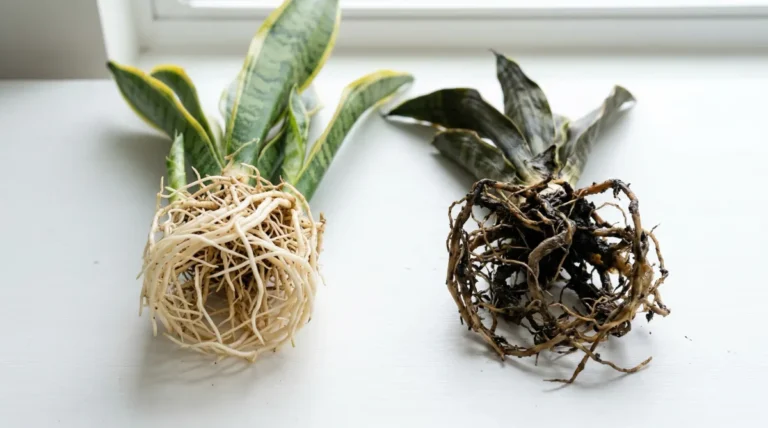
Yes, but only remove dead or mushy roots. Healthy roots are firm and white or light orange. Trim them with sterilized scissors.
Never cut more than one third of the root mass.
How long does it take for a snake plant to recover from pruning?
New growth usually appears within 2 to 4 weeks if the plant is in its growing season. Winter recovery takes longer. The cut leaf tip will not regrow, but the plant will push new shoots from the rhizome.
Should I seal snake plant cuts with wax or glue?
No. Sealing the cut traps moisture and invites rot. The leaf naturally calluses over in a few days.
Keep the cut dry and let the plant handle the rest.
Can I trim snake plant leaves in winter?
You can, but the plant heals more slowly because it is semi‑dormant. If possible, wait until early spring when active growth resumes. Trim only damaged leaves in winter to prevent disease spread.
How do I trim a snake plant that has become too wide?
Remove the largest outer leaves at the base. Thin out the oldest leaves first. This reduces width without shocking the plant.
Never cut more than one third of the leaves in a single session.
What do I do with the trimmed leaves?
Healthy leaves can be composted or used for propagation. Diseased leaves should go in the trash. Keep trimmings away from pets and children because the sap can cause mild irritation.
Final Decision Guide: Which Cut for Which Situation
| Situation | Cut Type | Location | Aftercare |
|---|---|---|---|
| Brown tips only | V‑cut | 1/8 inch below brown margin | Normal watering |
| Damaged or diseased leaf | Base cut | Flush with soil line | Reduce watering |
| Leaf too tall (propagation) | Top cut | 4–6 inches above soil | Callus cutting, then water root |
| Yellowing old leaf | Base cut | Flush with soil line | Normal watering |
| Bent but intact leaf | Leave or splint | No cut | Soft tie for support |
| Small scratch or crease | Leave alone | No cut | None needed |
Use this guide as your quick reference. Always ask yourself “will this cut help the plant function better?” If the answer is no, put the shears down. If the answer is yes, follow the technique for that situation and your snake plant will stay healthy, tidy, and growing for years.