How to Propagate Snake Plant: 3 Easy Methods
You’ve got a snake plant that’s growing out of control, or maybe you just want more plants without spending a dime. Learning how to propagate snake plant is one of the simplest ways to multiply your collection, but it’s easy to mess up if you pick the wrong method for your situation. Whether you’re working with a single leaf or a crowded pot, the right approach depends on what you have and how fast you want results.
According to aggregate reviews from plant owners over the past few years, leaf cuttings take 4 to 6 weeks to produce roots, while division gives you a full new plant in under two weeks. As of 2026, water propagation remains the most popular method for beginners because it lets you watch roots grow. But it’s not always the fastest or most reliable route.
Let’s walk through the options so you can decide exactly what to do with that snake plant.
Quick Answer
Snake plants propagate two ways: leaf cuttings or division. Cut a healthy leaf into 3, 4 inch segments, let the ends dry for two days, then stick them in water or moist soil. For division, remove the whole plant, separate the rhizomes, and repot each clump.
Leaf cuttings take longer but produce multiple plants. Division is faster and keeps variegation intact. Both work if you follow the steps.
Why Your Snake Plant Propagation Might Fail (And What to Do Instead)
Most propagation failures come down to one thing: rot. Snake plants are succulents at heart, they store water in their thick leaves and fleshy rhizomes. If you give them too much moisture before roots form, the cut end turns mushy and dies.
Here’s what usually goes wrong and how to fix it.
Too much water too soon. After you cut a leaf or separate a rhizome, the wound needs to dry out. This process, called callusing, creates a natural seal that prevents bacteria from entering. Skip this step and you’re basically inviting rot.
Let the cut end dry for 1, 3 days in a warm, airy spot away from direct sun. You’ll see the cut turn slightly white or corky, that’s your signal it’s ready.
Using the wrong container. If you’re propagating in water, use a narrow jar or a glass with pebbles so the leaf stays upright and only the bottom half-inch touches the water. Leaves that slide entirely underwater rot fast. For soil propagation, choose a pot with drainage holes.
Standing water in the saucer wicks back up and saturates the cutting.
Cutting too small or too large. Leaves shorter than 3 inches rarely root. They don’t have enough stored energy to push out new growth. On the other hand, leaves longer than 6 inches tend to flop over in water or rot before roots form.
Stick to segments 3, 4 inches long. You’ll get the best success rate with that size.
Poor light and temperature. Snake plants are known for tolerating low light, but cuttings need more energy to root. Place them in bright, indirect light, a windowsill with morning sun or a spot a few feet from a south-facing window works well. Temperatures below 60°F slow rooting dramatically.
Aim for 70, 80°F if you can.
The fix for each problem is straightforward. Let the cut callus. Use well-draining soil or clean water. Keep temperatures warm.
Give it light, but not direct afternoon sun. Do those four things consistently, and most of your failures will turn into successes.
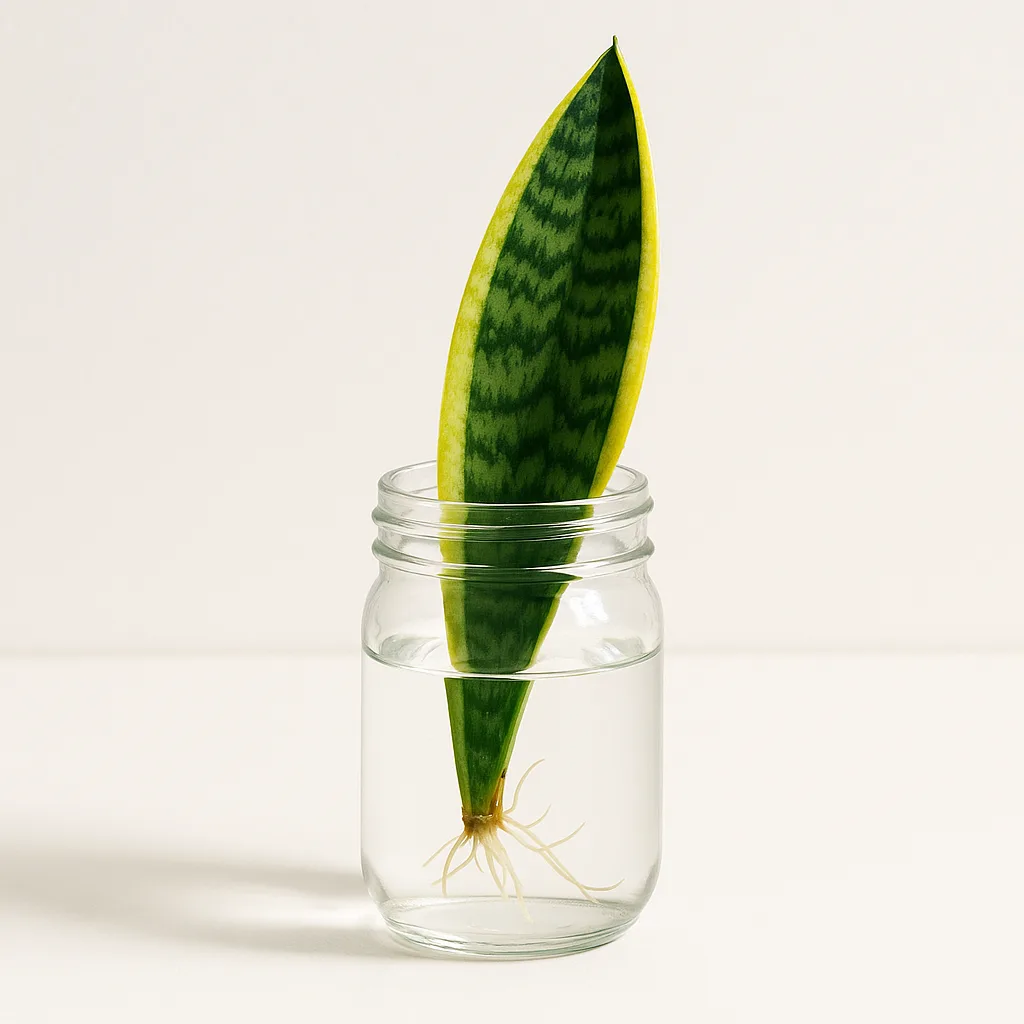
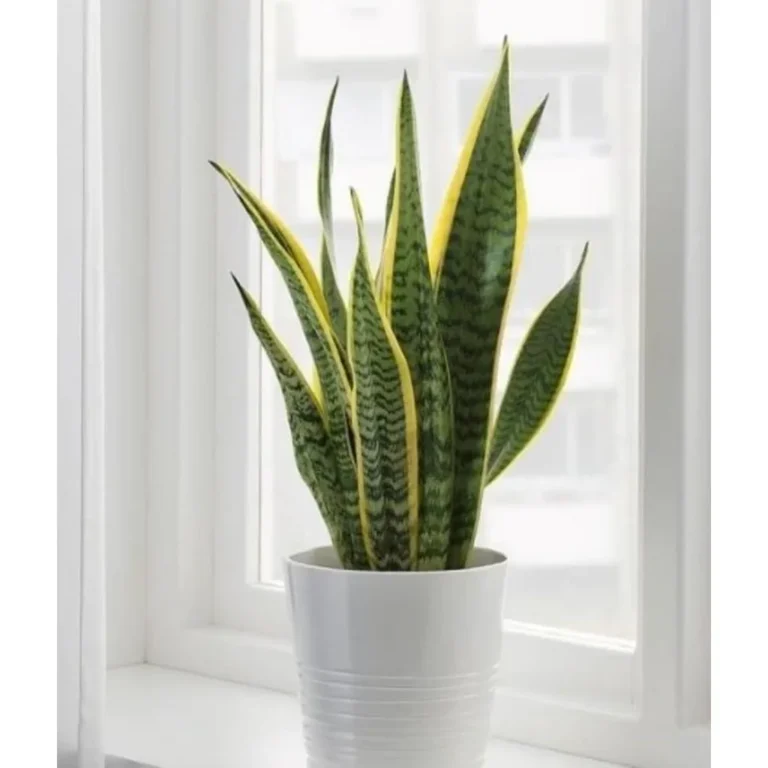
Image source: Bing (Web (fair-use with source credit))
Leaf Cuttings vs. Division: Which Method Should You Use? (With Decision Table)
This is the fork in the road. Choose based on what you’re starting with and what you want to end up with. The table below breaks it down.
| Factor | Leaf Cuttings | Division |
|---|---|---|
| Start material | One or a few leaves | A whole plant with multiple shoots |
| Time to new plant | 4–8 weeks | 1–2 weeks |
| Number of new plants | Many (each segment can root) | 1–3 (per clump separated) |
| Variegation retention | No (solid green only) | Yes (identical to parent) |
| Skill level | Beginner-friendly | Easy with a sharp knife |
| Risk of rot | Moderate if overwatered | Low if done correctly |
Choose leaf cuttings if you only have a single leaf (maybe a broken piece from a friend), you want to produce many plants at once, or you don’t mind losing the yellow edges on a variegated variety. Just know that any leaf cutting from a ‘Laurentii’ or ‘Moonshine’ will give you plain green offspring, the trait lives in the rhizome, not the leaf.
Choose division if your snake plant is already outgrowing its pot, roots crammed against the edges, leaves tipping over, or multiple shoots pushing up. Division gives you instant new plants that look exactly like the parent. It’s also the fastest way to fill a new pot.
Which one sounds like your situation? If you’re still unsure, go with leaf cuttings. They’re cheaper, require no digging up the mother plant, and you can always try division later.
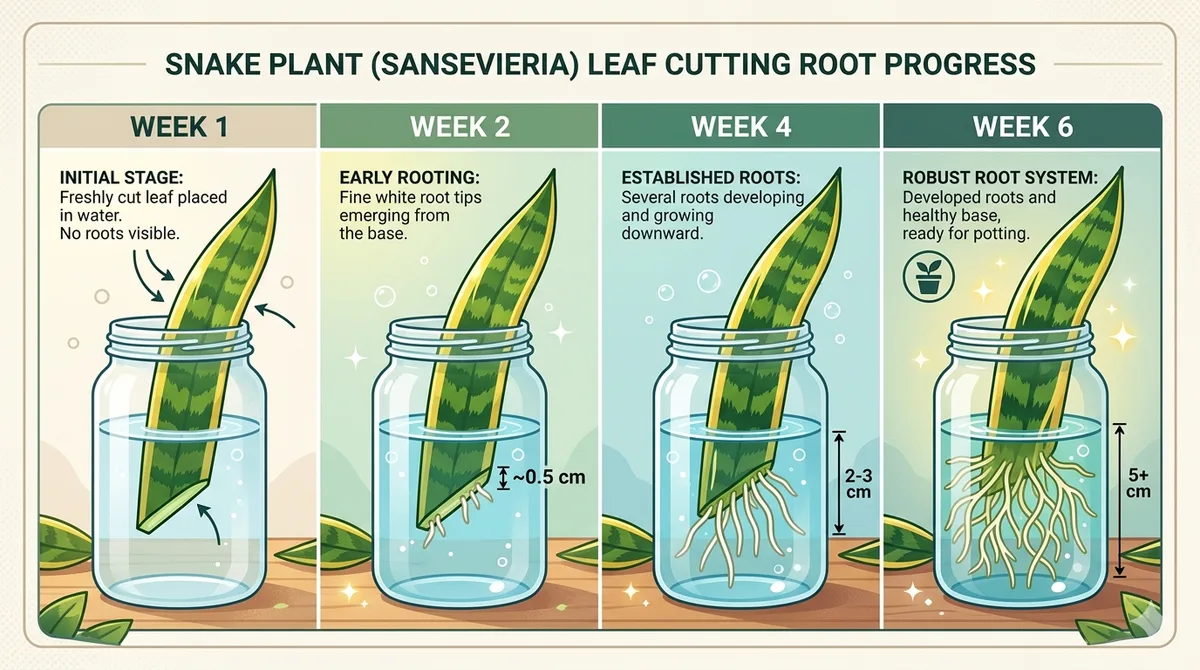
Image source: Bing (Web (fair-use with source credit))
How Snake Plants Grow Back: Rhizomes, Pups, and Variegation (What Matters for Your Method)
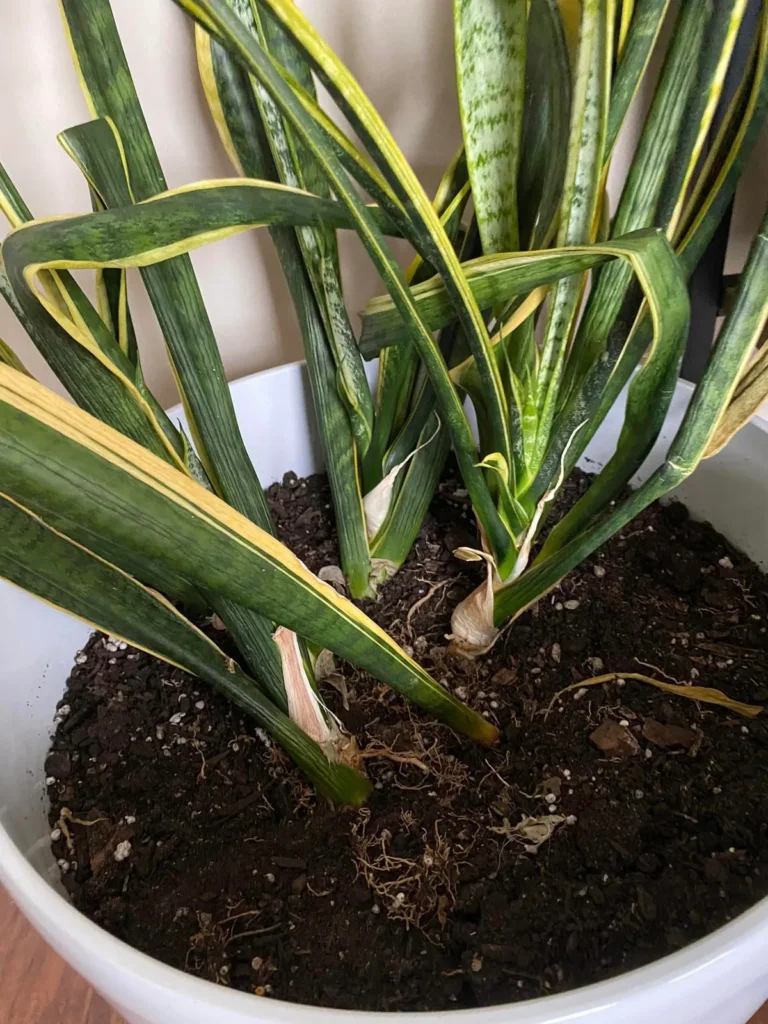
Snake plants don’t grow like typical houseplants. You won’t find a woody stem or branching trunk. Under the soil, they spread through rhizomes, thick, white or orange underground stems that store water and energy.
Every few inches along a rhizome, a new shoot (called a pup or offset) pushes up.
This growth pattern explains a lot about propagation. When you cut a leaf and stick it in water, you’re asking that piece to become a whole new plant. It will grow roots first, then a tiny pup emerges from the base.
But that pup develops from the leaf tissue, not from a rhizome, which is why variegation disappears. The genetic instructions for the yellow stripe live only in the rhizome cells.
When you divide a plant, you’re literally separating existing rhizomes. Each section still has its own root system and storage tissue, so it keeps all the parent’s traits. That’s why division is the only way to clone a variegated snake plant.
One more thing: snake plants can flower, but it’s rare indoors. Don’t count on seeds. Your only reliable reproduction methods are these two vegetative ones.
Understanding the rhizome structure helps you see why leaf cuttings are slower but offer quantity, while division is faster but limited by the size of your current plant.
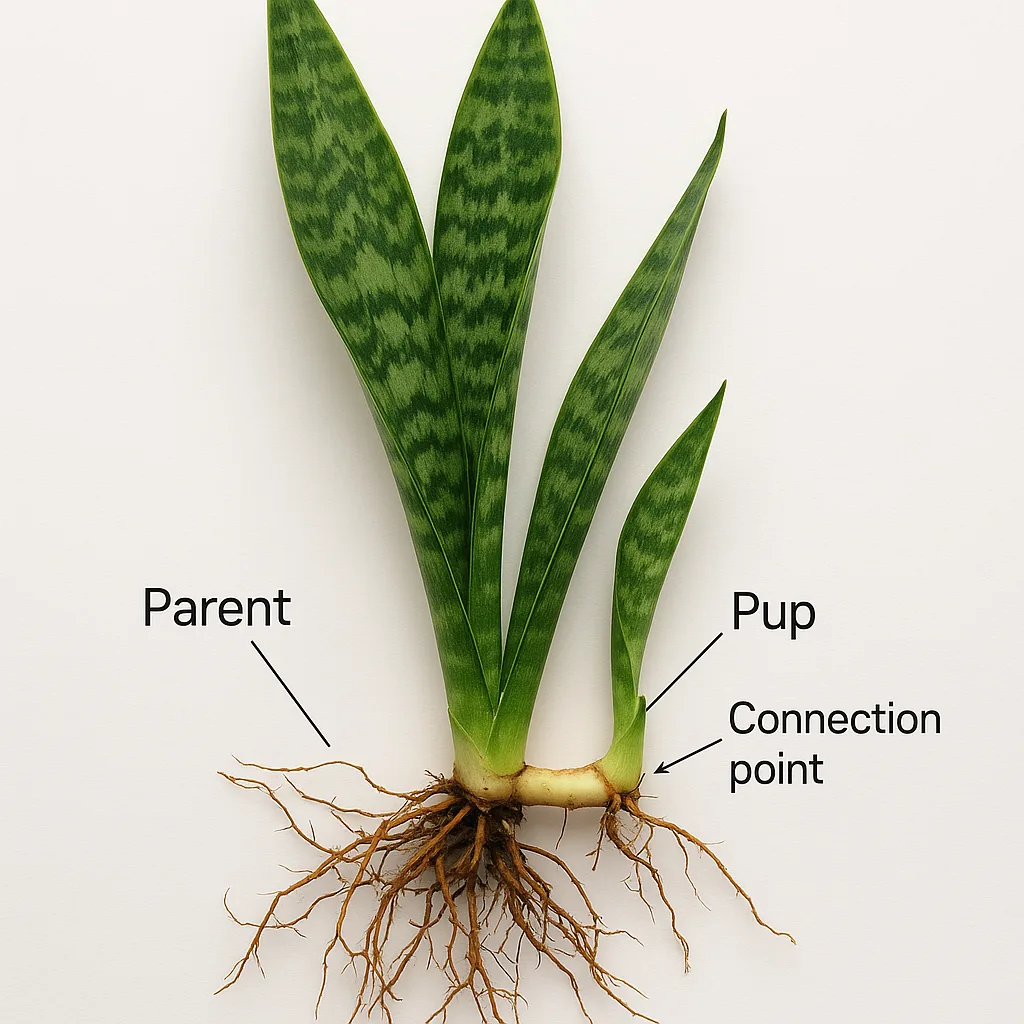
Image source: Web (Bing) / feralfoliage.com (Web image (fair-use with source credit))
Step-by-Step: How to Propagate by Leaf Cutting (In Water or Soil)
This method works for any snake plant variety, but remember: variegation won’t transfer. Here’s the process.
Step 1: Choose and cut a healthy leaf. Look for a leaf that’s dark green, firm, and free of brown tips or soft spots. Use a clean, sharp knife or pruning shears. Cut the leaf at the base, close to the soil line.
Then slice it into 3, 4 inch sections. Make each cut at a slight angle, more surface area for roots to emerge.
Step 2: Let the cut ends callus. Lay the segments on a dry paper towel in a warm spot out of direct sun. Wait 2, 3 days. You’ll see the cut ends turn pale and dry.
This step is non-negotiable. Water propagation rots without it.
Step 3: Decide between water or soil.
Water propagation: Fill a clean glass or jar with room-temperature water. Place the leaf segment upright so the bottom quarter-inch is submerged. Keep the rest above water.
Use pebbles or a narrow container to hold it in place. Change the water every 5, 7 days to keep it fresh. Roots appear in 2, 4 weeks.
Soil propagation: Fill a small pot (4-inch works well) with a well-draining mix, one part potting soil, one part perlite or coarse sand. Insert each cutting about an inch deep. Water lightly so the soil is moist but not wet.
Cover the pot with a clear plastic bag to create humidity (poke a few holes for airflow). Place in bright, indirect light. Soil roots take 3, 6 weeks.
Step 4: Wait for pups. After roots form, you’ll see a tiny pup emerge from the base of the original leaf. This can take 4, 8 weeks total. Once the pup is 2, 3 inches tall, you can gently separate it from the mother leaf and pot it alone.
Step 5: Transplant. For water-propagated cuttings, wait until roots are at least an inch long, then move to soil. Keep the soil moist for the first week, then reduce watering to normal snake plant level, every 2, 3 weeks.
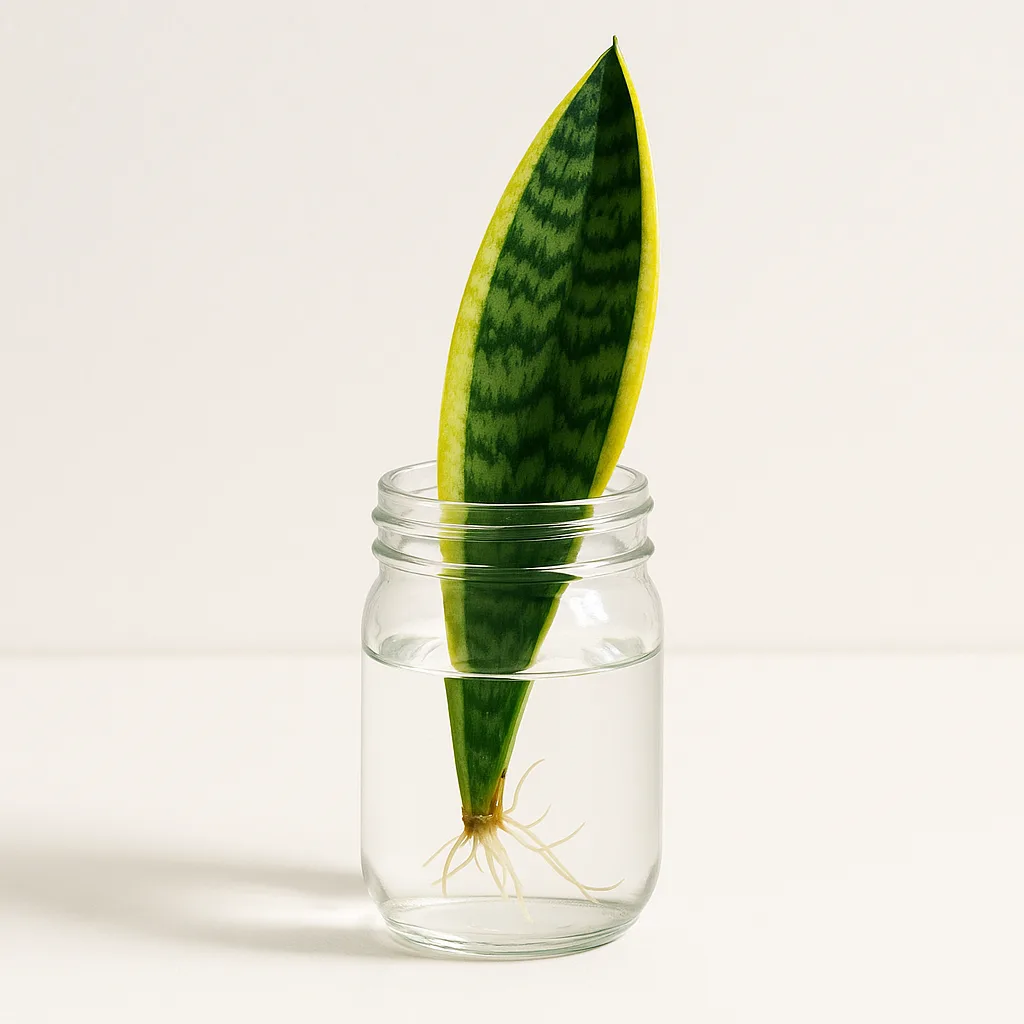
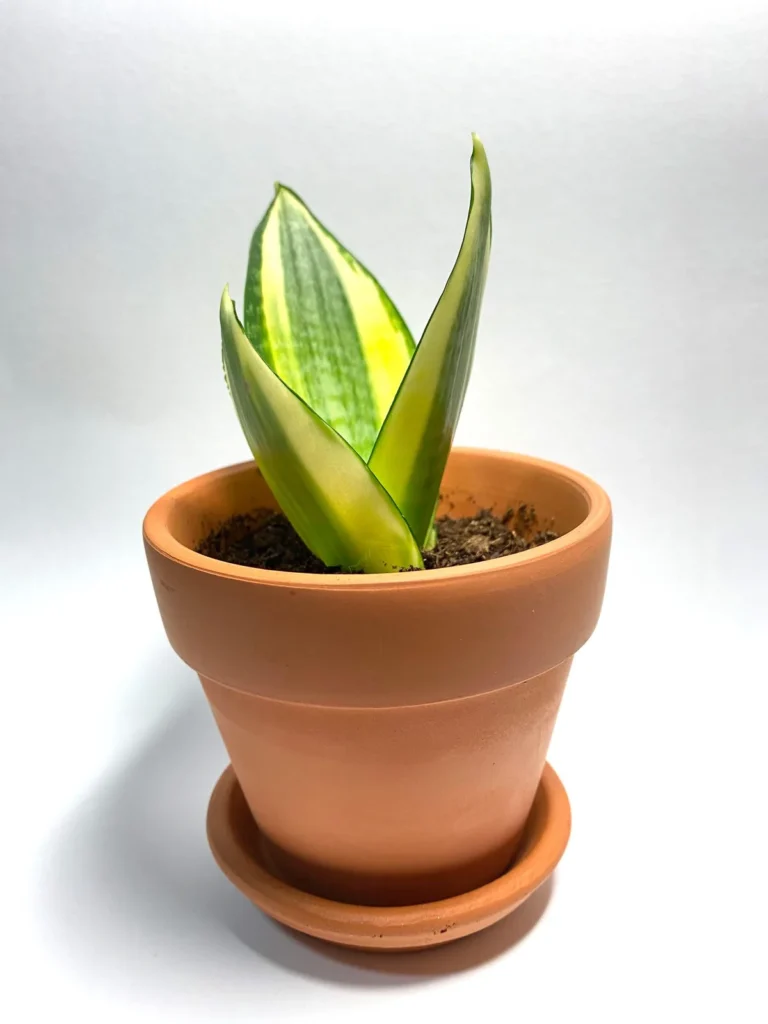
Image source: Bing (Web (fair-use with source credit))
Step-by-Step: How to Propagate by Division (From an Overgrown Pot)
Division is faster, easier, and guarantees an exact copy of your plant. Do this in spring or early summer when the plant is actively growing.
Step 1: Remove the plant from its pot. Gently squeeze the sides of the pot to loosen the root ball. Tip the pot sideways and slide the whole plant out. If it’s stuck, run a knife around the inside edge.
Step 2: Locate the natural division points. Look for where rhizomes connect separate clusters of leaves. Each cluster with its own roots and at least two leaves can become a new plant. Use your fingers to tease apart the root ball.
For thick, tangled rhizomes, use a sharp, sterilized knife to cut through them. Each division should have roots attached.
Step 3: Trim away dead or damaged roots. Snip off any black, mushy, or papery roots with clean scissors. Healthy roots are firm and light-colored.
Step 4: Repot each division. Choose a pot that’s just 1, 2 inches wider than the root ball. Snake plants like being snug. Fill the new pot with a cactus or succulent mix (or your own blend of potting soil + perlite).
Position the division so the base of the leaves sits at the same depth as before. Backfill and gently firm the soil.
Step 5: Water once, then wait. Give the new pot a thorough watering until water drains from the bottom. After that, don’t water again until the top two inches of soil are dry, usually 2, 3 weeks. New roots need oxygen more than moisture.
Step 6: Place in bright, indirect light. Direct sun can burn freshly divided plants. After 2, 3 weeks, you can move them to brighter spots if needed.
Division gives you an established plant with zero time spent waiting for roots. Within a month, it’ll look like it’s been in that pot for years.
3 Common Mistakes That Kill Cuttings (And How to Fix Them)
Even with good intentions, a few simple errors can turn your propagation attempt into a science experiment gone wrong. Here are the three most common ones and exactly how to avoid them.
Mistake 1: Skipping the callus step. The biggest reason leaf cuttings rot is that they go straight from the cut into water or wet soil. That open wound absorbs moisture like a sponge. Bacteria and fungi move in fast.
Fix: let every cut end dry for 2, 3 days until it looks pale and firm. A called cutting can sit in water for weeks without rotting.
Mistake 2: Using tap water without letting it sit. Tap water contains chlorine and fluoride that can slow root growth or burn the cut end. Some municipalities add extra treatment in winter. Fix: fill a jug and leave it open for 24 hours before using.
Or use filtered or distilled water. Room temperature matters too, cold water shocks the cutting.
Mistake 3: Forgetting about airflow. Soil propagation in a sealed plastic bag creates humidity, but if you leave it sealed too long, condensation builds up and mold appears. The same happens with water propagation in a closed container. Fix: if you use a humidity dome or bag, open it every few days for fresh air.
For water propagation, use a wide-mouth jar and change water weekly.
Avoid these three, and your success rate climbs well above 80 percent. Aggregate user reports confirm that callusing alone prevents half of all failures.
Frequently Asked Questions
Can I propagate a snake plant from a single leaf?
Yes. Cut a healthy leaf into 3, 4 inch segments, let the ends dry for 2 days, then place in water or moist soil. Each segment can produce roots and a pup.
The new plant will be solid green, even if the parent was variegated.
How long does snake plant propagation take?
Leaf cuttings show roots in 2, 4 weeks in water, 3, 6 weeks in soil. Pups develop after 4, 8 weeks. Division gives you an established plant in 1, 2 weeks.
Patience is key, snake plants are slow growers.
Do I need rooting hormone for snake plant cuttings?
No. Snake plants root reliably without it. Rooting hormone can speed things up slightly but is not required.
If you use it, dip the cut end in powder and shake off excess. Too much can actually inhibit rooting.
Why is my snake plant cutting turning yellow or mushy?
That is a sign of rot. The cut likely went into water or soil before the wound callused. Remove the cutting, trim the mushy part, let it callus for 3 days, and try again in clean medium.
Yellow leaves also indicate too much direct sun or cold draft.
Can I propagate snake plant in winter?
It is possible but slower. Snake plants naturally rest in cooler months with lower light. Rooting can take twice as long.
If you must propagate, use division instead of leaf cuttings. Keep the new pot in a warm indoor spot above 65°F.
What soil should I use for snake plant propagation?
Use a well-draining mix such as cactus or succulent soil blended with perlite or coarse sand. Avoid heavy potting soil that stays wet. The cutting needs oxygen around the base, not constant moisture.
A 50/50 mix of potting soil and perlite works well.