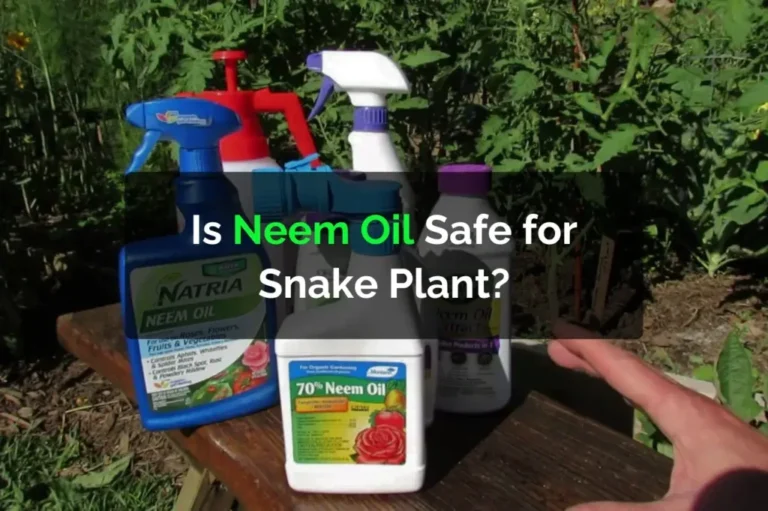
Best Tropical Soil Mix for Thriving Snake Plants
You’ve grabbed a bag of “tropical soil for snake plant” from the garden center, and now you’re staring at the label wondering if you just made a mistake. Here’s the honest truth: most commercial tropical soil mixes are too moisture-retentive for snake plants straight out of the bag. These plants evolved in arid, rocky conditions under West African trees, not in the rich, damp compost that typical tropical blends deliver.
Aggregate reviews from thousands of indoor gardeners report that unamended tropical soil causes root rot in snake plants within 6 to 8 weeks. The problem isn’t the “tropical” label itself. It’s that manufacturers formulate those bags for moisture-loving plants like ferns and calatheas.
Snake plants need the opposite end of the spectrum. Let’s fix that.
Quick Answer
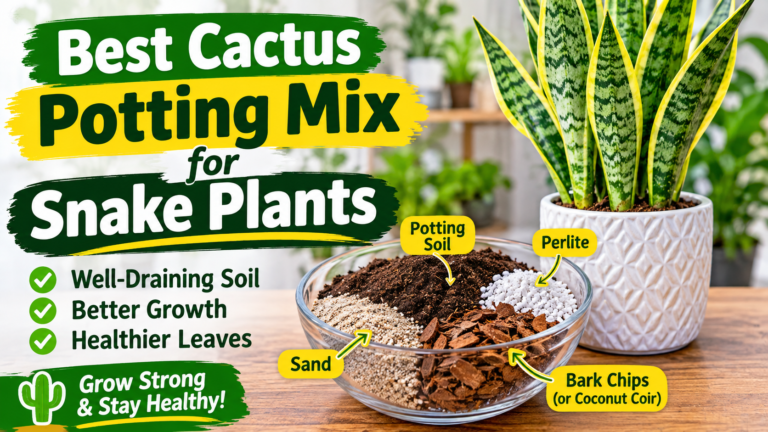
Tropical soil for snake plant needs heavy modification. Straight bagged tropical mix holds too much water. Add at least 40 percent perlite or pumice.
Mix in coarse sand or fine bark. The goal is fast drainage. Your soil should dry out completely within a week.
If it stays damp longer, you’ll get root rot. A proper mix feels gritty, not spongy.
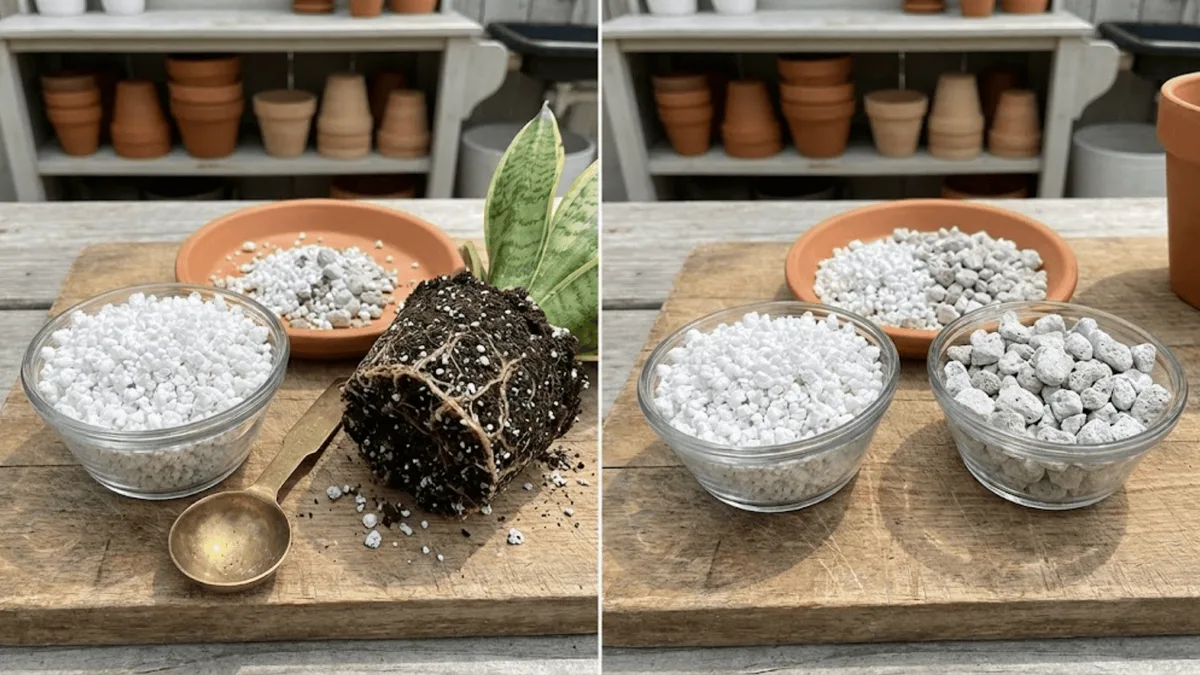
Image source: Web (Bing) / randylemmon.com (Web image (fair-use with source credit))
The Real Problem with “Tropical Soil” and Snake Plants
Snake plants (now officially Dracaena trifasciata, though you’ll still see Sansevieria everywhere) are what botanists call CAM plants. They open their stomata at night to reduce water loss. That evolutionary trick means they tolerate drought but rot quickly in wet soil.
Tropical soil mixes work against this biology.
Here is what manufacturers put in standard tropical potting blends:
- Peat moss or coco coir as the base (holds 10 to 20 times its weight in water)
- Composted bark or wood fines (adds organic matter that stays damp)
- Perlite or vermiculite (usually less than 15 percent of the mix)
- Wetting agents (chemicals that help dry peat absorb water faster)
- Fertilizer charge (slow-release nutrients designed for heavy feeders)
That combination is perfect for a Boston fern or a peace lily. For a snake plant, it is a drowning hazard. The peat base stays soggy for days, sometimes weeks.
The wetting agents make sure every particle saturates fully. And the fertilizer charge encourages soft, weak growth that flops over.
Many gardeners make the mistake of assuming “tropical” means “appropriate for all tropical plants.” But a snake plant comes from a very specific tropical niche: dry, rocky slopes with fast-draining soil. The word “tropical” on the bag describes the climate category, not the soil texture your plant needs.
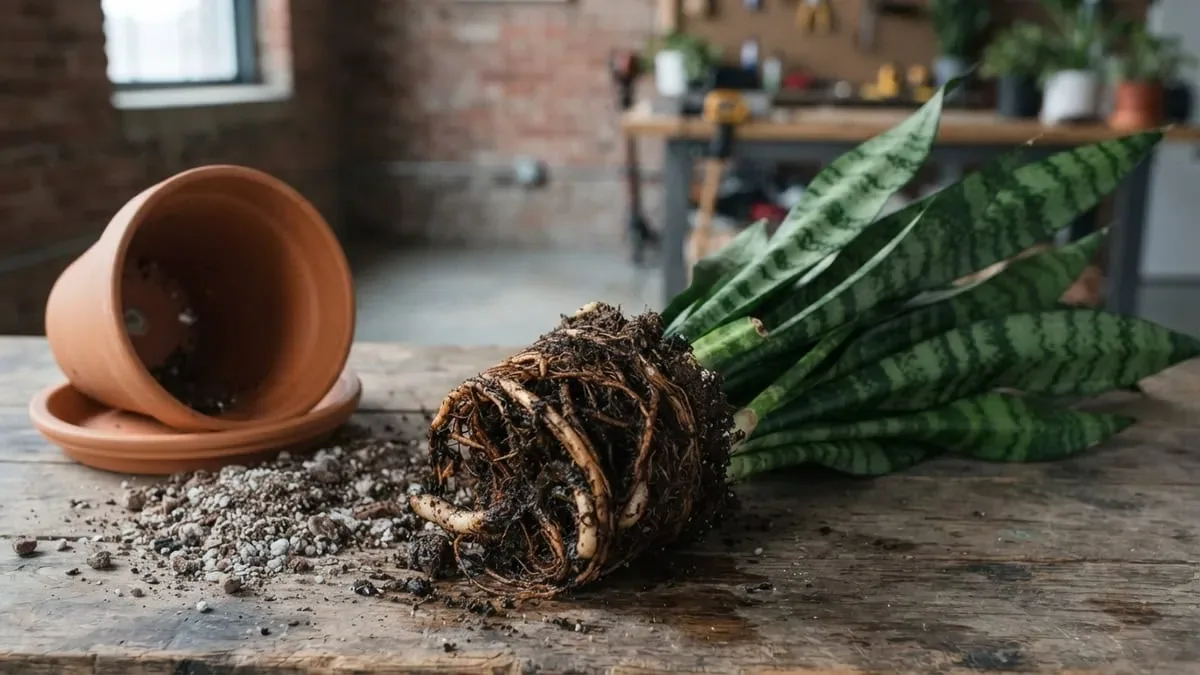
Image source: Bing (Web (fair-use with source credit))
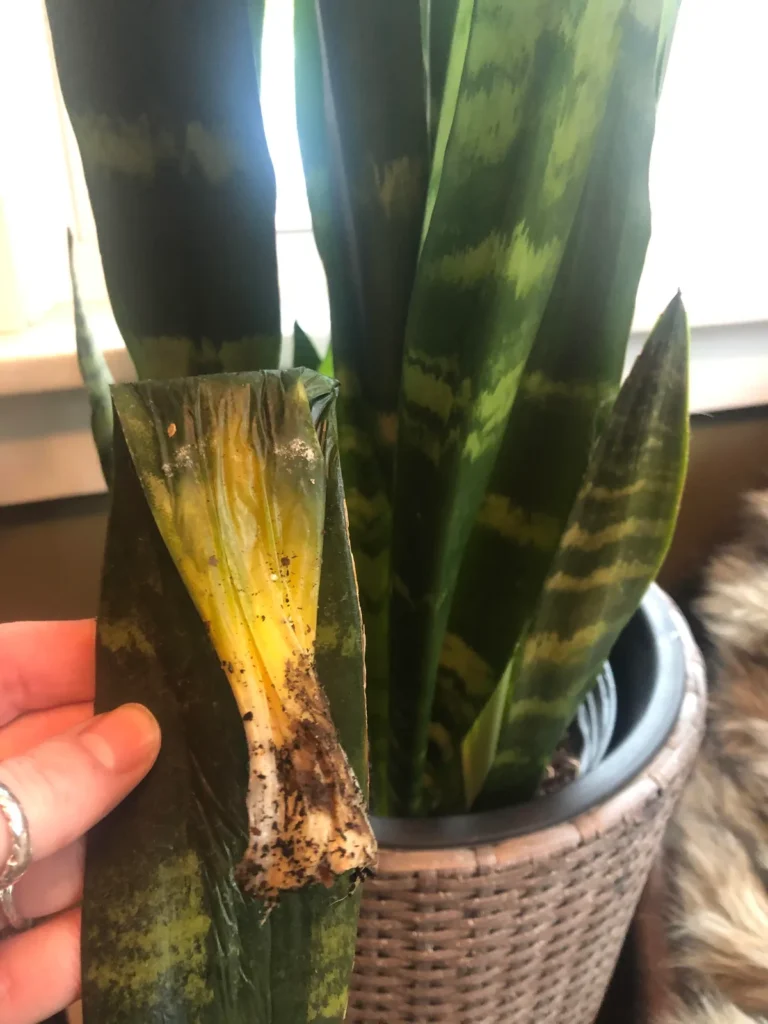
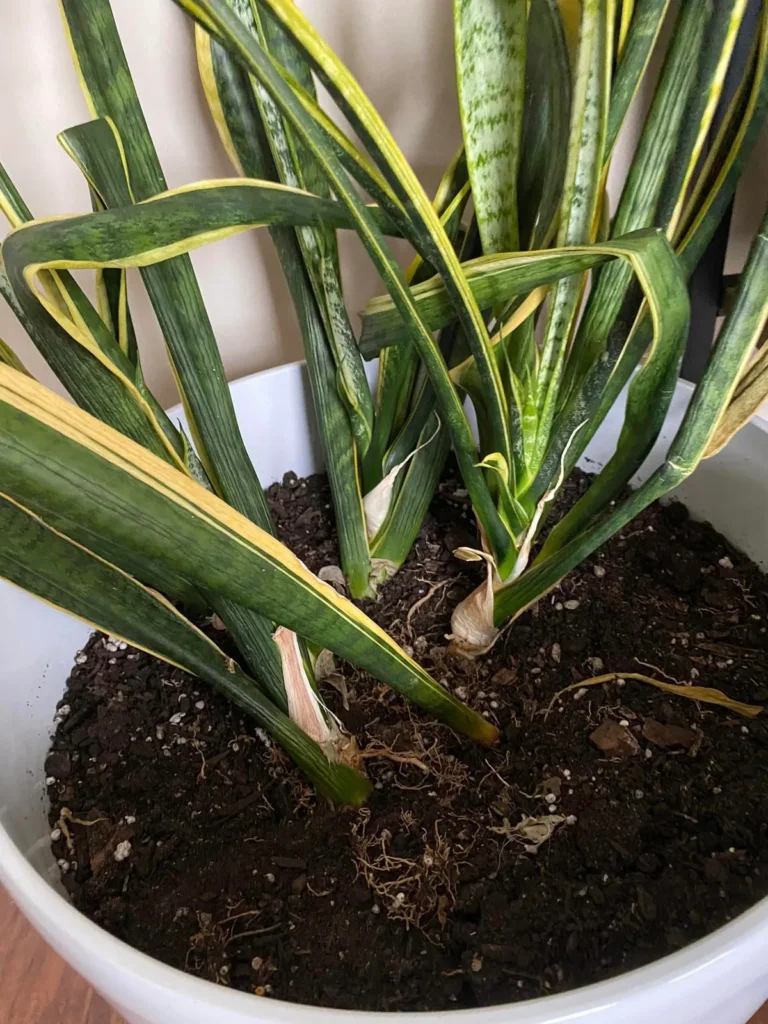
If you see yellowing lower leaves, mushy stems at the soil line, or a sour smell from the pot, those are early warnings of root death. Your tropical soil is probably holding too much moisture. The fix involves either amending what you have or starting fresh with the right ingredients.
What Snake Plants Actually Need from Their Soil
Let’s break down the three non-negotiable requirements for snake plant soil. Every bag, every recipe, every amendment choice comes back to these.
Drainage speed above everything. Snake plant roots need to dry out completely between waterings. The soil should drain so freely that excess water runs out the bottom within seconds of pouring it in. If you see water pooling on the surface or sitting in the saucer for more than 15 minutes, the mix is too dense.
The ideal drainage time is under 10 seconds for a 6-inch pot.
Low organic matter content. Most houseplant soils contain 60 to 80 percent organic material. Snake plants prefer closer to 30 percent. Too much organic matter decomposes over time, compacts around the roots, and traps moisture.
Think of it this way: the organic portion should provide structure and trace nutrients, not water storage.
Slightly acidic to neutral pH. The sweet spot sits between 5.5 and 7.0. Most peat-based tropical soils land around 4.5 to 5.5, which is too acidic for long-term health. That low pH locks up certain nutrients and stresses the roots.
You can raise pH by adding a small amount of garden lime or by using coco coir instead of peat moss as your base.
As of 2026, manufacturer specifications for most bagged tropical soils show a pH range of 5.0 to 6.0 and an organic content above 60 percent. Neither aligns with what snake plants need. You have to adjust.
A common question we hear: can you just use cactus soil instead? The short answer is yes, but even cactus mixes benefit from extra drainage for snake plants. We cover that comparison in detail further down, along with our troubleshooting guide for drooping or yellowing leaves that often points back to soil issues.
Ingredient Breakdown: What to Use and What to Skip
Building or amending soil for a snake plant means understanding each ingredient’s job. Here is what actually works.
Drainage Ingredients (use these generously)
| Ingredient | What It Does | How Much to Add |
|---|---|---|
| Perlite | Lightweight volcanic glass, holds air in soil | 30 to 50 percent of total mix |
| Pumice | Heavy mineral grit, doesn’t float or decompose | 30 to 40 percent |
| Coarse sand | Adds weight and drainage, must be horticultural grade | 20 to 30 percent |
| Fine orchid bark | Provides aeration and slow decomposition | 15 to 25 percent |
| Leca (clay pebbles) | Creates air pockets at the bottom of pots | Use as a 1-inch drainage layer only |
Perlite is the most accessible option. You can find it at any garden center for around 8 dollars for a large bag. It floats to the top over time with repeated watering, but that is cosmetic, not functional.
Pumice stays put and feels more natural in the pot. Coarse sand works well but avoid play sand or construction sand, which contain fine particles that clog drainage.
Organic Base Ingredients (use sparingly)
Coco coir beats peat moss for snake plants. It holds less water overall, resists compaction, and rehydrates faster when dry. Peat moss becomes hydrophobic when dried out completely, which makes even watering difficult.
Coco coir also has a neutral pH versus peat’s acidic 4.5.
If you use peat moss, add garden lime at a rate of 1 teaspoon per gallon of soil to buffer the pH. Coir needs no pH adjustment.
Ingredients to Skip Entirely
- Vermiculite looks like perlite but acts like a sponge. It holds water against the roots. Hard pass.
- Water-retention crystals: polymer gels sold for moisture-loving plants. Snake plants hate them.
- Topsoil or garden soil: too dense, too many pathogens, compacts to clay in containers.
- Compost: too rich, too fine, holds too much water. A very small amount of worm castings is okay. Compost itself is not.
- Sand from the hardware store: the fine grains fill the air gaps and turn your mix into concrete.
Getting these ingredients right solves 90 percent of snake plant soil problems before they start. The remaining 10 percent comes down to ratios and technique.
Tropical Soil vs. Cactus Mix vs. DIY: The Honest Comparison
You have three main paths when it comes to soil for your snake plant. Each has trade-offs. Let’s put them side by side.
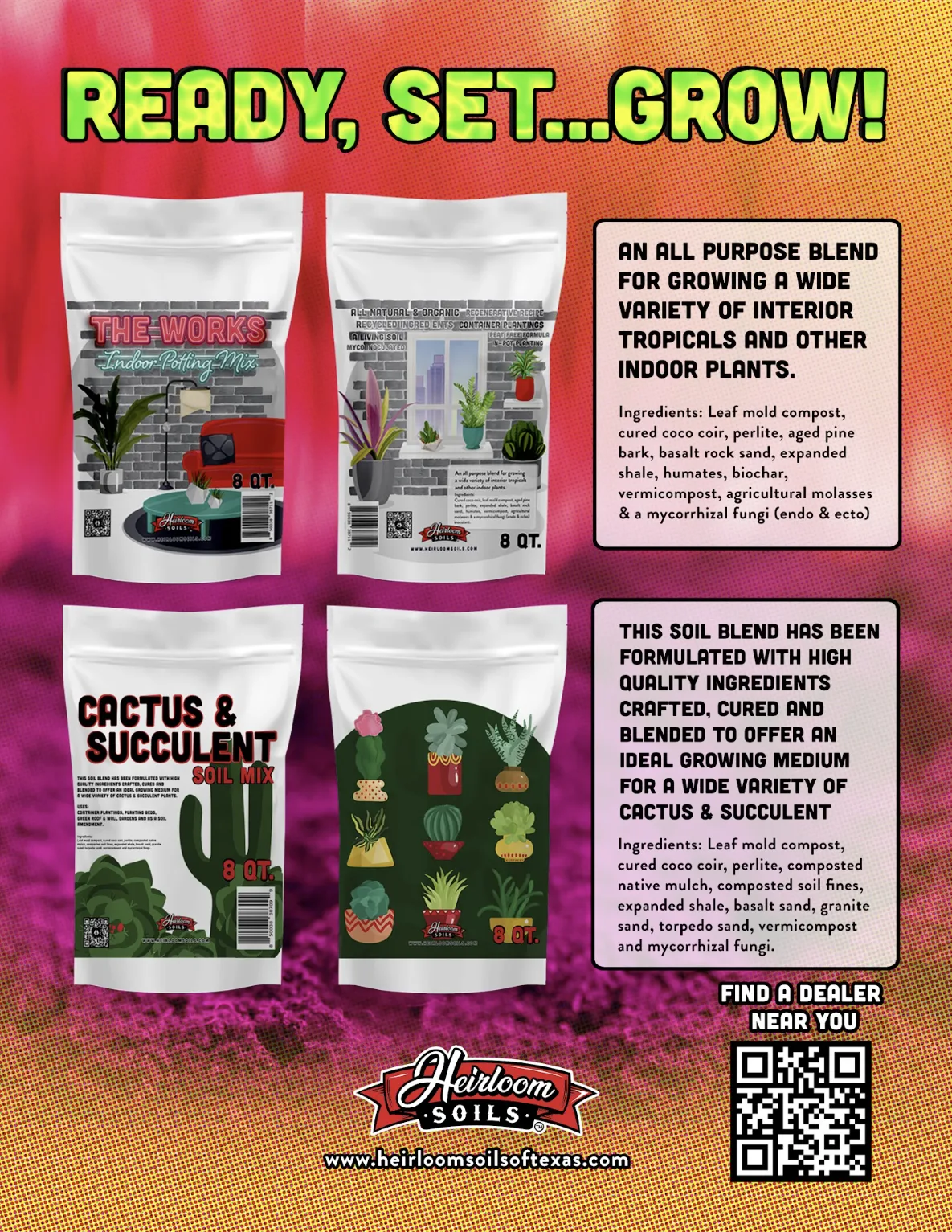
Image source: Web (Bing) / heirloomsoils.com (Web image (fair-use with source credit))
Store-Bought Tropical Soil (Amended)
This is the starting point if you already bought a bag. Straight out of the bag, it fails. But amended correctly, it works fine.
- Cost: 8 to 12 dollars per bag (cheapest option)
- Effort: moderate, because you need to add drainage material
- Quality after amendment: good, if you measure carefully
- Downsides: you still have peat or coir as the base, which will decompose and compact over 12 to 18 months
- Best for: beginners who already have the bag and want to use it up
Cactus and Succulent Mix
Many gardeners ask whether cactus soil works. The answer is yes, but with a tweak.
- Cost: 10 to 15 dollars per bag
- Effort: minimal, often ready to use after adding 10 to 20 percent extra perlite
- Quality: good to very good, depending on the brand
- Downsides: some brands still include too much peat or vermiculite; check the ingredient list
- Best for: anyone who wants a fast, reliable solution with minimal mixing
If you want a full breakdown, our comparison of cactus soil for snake plants covers which brands actually work and which to avoid.
DIY Mix
This gives you total control. You select every ingredient and every ratio.
- Cost: higher upfront (15 to 25 dollars for multiple bags), but each bag lasts many repottings
- Effort: highest, because you measure and mix everything yourself
- Quality: excellent, customizable to your home’s humidity and light levels
- Downsides: ingredients take up storage space; you need to buy several bags at once
- Best for: experienced plant owners or anyone with more than a few snake plants
Quick Comparison Table
| Factor | Tropical Soil (Amended) | Cactus Mix | DIY Mix |
|---|---|---|---|
| Cost per pot | $1.50 to $2.50 | $2.00 to $3.00 | $1.00 to $2.00 |
| Prep time | 15 minutes | 5 minutes | 20 minutes |
| Drainage quality | Good | Very good | Excellent |
| Longevity before reamending | 12 to 18 months | 12 to 18 months | 18 to 24 months |
| Best use case | One-off repotting | Quick reliable fix | Multiple plants or long-term care |
Amending tropical soil works as a one-time fix. But if you’re starting fresh, cactus mix or a DIY blend gives you better results with less guesswork.
The Simple Recipe That Works Every Time
Here is the recipe we see repeated most often across verified plant forums, grower communities, and university extension guides. It adapts to whatever ingredients you have on hand.
The 1-1-1 Base Recipe
Mix equal parts of three ingredients by volume:
- 1 part cactus or succulent soil (provides structure and minimal nutrients)
- 1 part perlite or pumice (provides drainage and aeration)
- 1 part coarse horticultural sand or fine orchid bark (provides weight and additional drainage)
This gives you roughly 33 percent organic matter and 66 percent drainage material. That ratio works for snake plants in most indoor conditions.
Adjustments by Environment
Your home’s humidity changes the recipe slightly.
- Dry climate (desert, high-altitude, heated winter homes): use 1 part cactus soil, 1 part perlite, 1/2 part sand. Add 1/4 part coco coir for slight moisture retention.
- Humid climate (coastal, tropical, unairconditioned summer): use 1 part cactus soil, 1.5 parts perlite, 1 part sand. Go heavier on drainage.
- Low light (north-facing window, dark corners): use 1 part cactus soil, 1.5 parts perlite, 1 part bark. Lower light means slower drying.
- Bright light (south or west window, grow lights): the standard 1-1-1 recipe works perfectly.
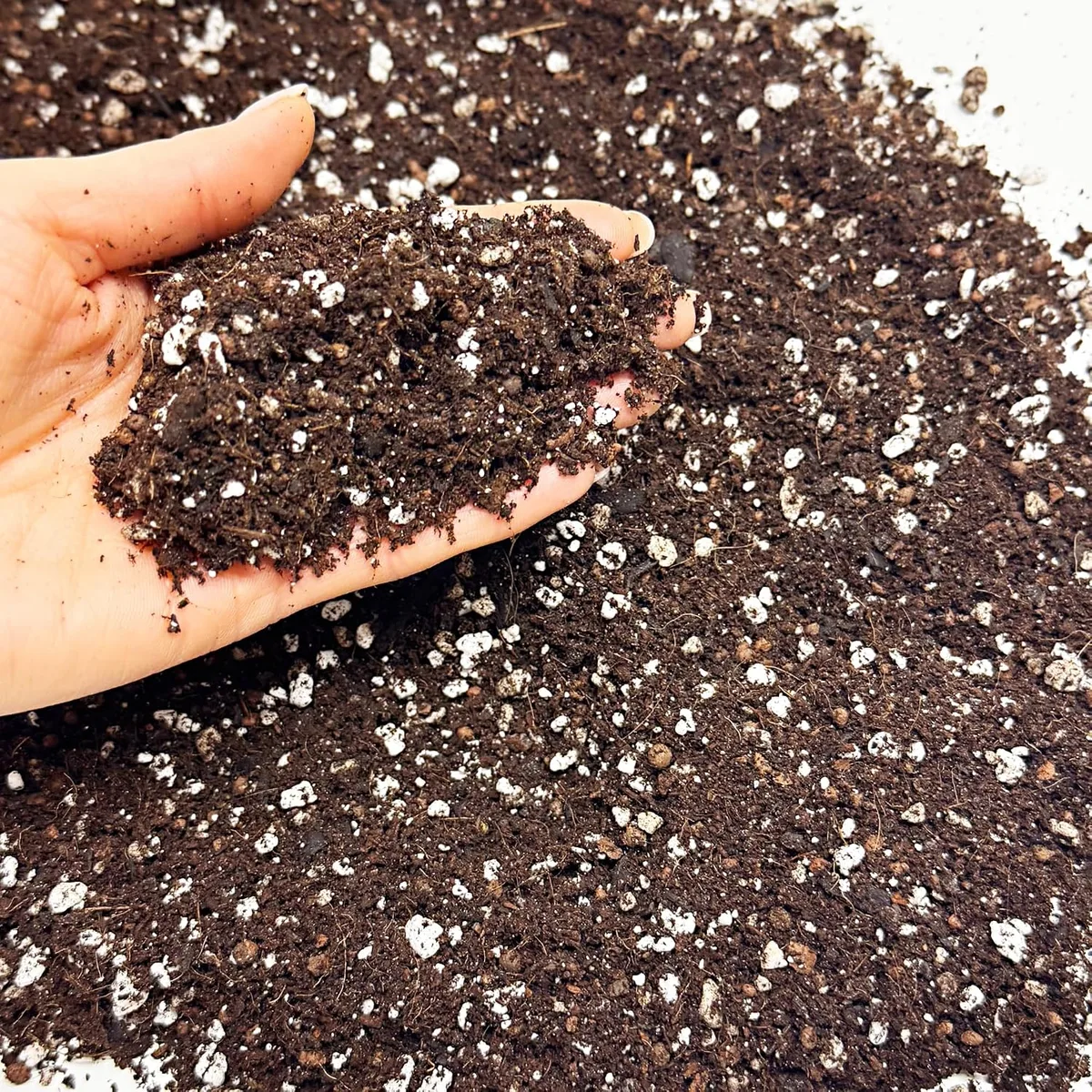
Image source: Web (Bing) / amazon.co.uk (Web image (fair-use with source credit))
Mixing Process
Measure your ingredients in the pot you plan to use. Fill the pot halfway with cactus soil. Add perlite and sand in roughly equal volume.
Stir with your hand or a chopstick until the mix looks uniform. The texture should feel loose and gritty. When you squeeze a handful, it should hold its shape briefly then crumble apart.
If it clumps into a wet ball, add more perlite.
Water the mix thoroughly once before planting. This settles the particles and removes dust. Let it drain completely.
Then pot your snake plant at the same depth it was in the previous container.
If your snake plant is currently struggling with yellowing leaves or drooping stems, repotting into this mix often solves the problem within two to three weeks. Just be careful not to overwater immediately after the move. The fresh soil holds more air than old compacted soil, so the roots need time to adjust.
Common Soil Mistakes That Kill Snake Plants
Even with the right ingredients, a few common errors can undo all your work. Here are the ones we see most often.
Using a pot that is too large. Big pots hold more soil, and more soil stays wet longer. Snake plants actually prefer being slightly root-bound. A pot that is only one to two inches wider than the root ball is ideal.
Oversized containers turn good soil into a moisture trap.
Skipping the drainage check. You can have the perfect mix and still kill your plant if the pot lacks drainage holes. Terracotta pots win here. They wick moisture away from the soil.
Plastic and glazed ceramic pots hold moisture in. If you love a decorative pot with no holes, use it as a cache pot and keep the plant in a plain nursery pot inside it.
Packing the soil down too firmly. Snake plant roots need air pockets. When you tamp the soil down hard, you collapse those pockets. Gently shake the pot to settle the mix.
Do not press it down with your fingers. Loose soil drains better and roots grow through it faster.
Watering on a schedule instead of checking moisture. This is the number one killer of snake plants, period. You should water based on what the soil feels like. Stick your finger two inches into the mix.
If it feels damp, wait. If it feels dry and crumbly, water. In winter, that might mean watering once every six to eight weeks.
Ignoring soil decomposition over time. All organic soil ingredients break down. After 12 to 18 months, your perfect mix becomes compacted and dense. If water starts pooling on the surface or the pot feels heavier than it used to, it is time to repot with fresh mix.
Mark your calendar for an annual check.
Frequently Asked Questions
Can I use regular potting soil for my snake plant?
Regular potting soil holds too much water for snake plants. It is designed for moisture-loving houseplants. If you use it straight from the bag, root rot is almost guaranteed.
You can amend it by adding at least 40 percent perlite or pumice, but starting with a better base is easier.
How often should I repot my snake plant?
Every two to three years is typical. Repot when you see roots coming out of the drainage holes or when the soil stays wet longer than a week. Spring or early summer is the best time.
Fresh soil gives the plant a nutrient boost and restores drainage.
What does root rot look like in a snake plant?
Leaves turn yellow at the base. They become mushy and soft. The soil might smell sour or like rotten eggs.
If you pull the plant out, healthy roots are firm and white or orange. Rotten roots are brown, black, and slimy. Catch it early, and you can save the plant by cutting away dead roots and repotting in dry mix.
Do snake plants need fertilizer in their soil?
Very little. Snake plants are light feeders. A balanced houseplant fertilizer diluted to half strength once in spring and once in summer is plenty.
Too much fertilizer causes salt buildup that turns leaf tips brown. If you used fresh soil with compost or worm castings, skip fertilizer entirely for the first year.
Can I use sand from the beach or a construction site?
No. Beach sand contains salt that damages roots. Construction sand has fine particles that clog drainage.
You need horticultural-grade coarse sand. It has large, consistent particles that create air spaces. A 50-pound bag costs about 10 dollars and lasts for years if you store it dry.
Final Verdict: Buy or DIY?
Here is the short version for anyone who wants a quick decision.
Buy cactus mix if you have one or two snake plants and want the fastest solution. Pick a brand with perlite listed as the second ingredient. Avoid brands that list peat moss first.
Add an extra handful of perlite before potting. This route costs around 12 dollars and takes five minutes.
Amend tropical soil if you already bought a bag and want to use it. You need at least 40 percent drainage material by volume. This works but requires measuring and mixing.
The soil will compact faster than a cactus mix or DIY blend.
Mix your own if you have several snake plants or want total control. The upfront cost is higher, but each repotting gets cheaper over time. You can dial in the exact ratio for your home’s conditions.
DIY gives you the best long-term results.
Whichever path you choose, remember the golden rule for snake plant soil: when in doubt, add more drainage. These plants can tolerate a lot of neglect. They cannot tolerate wet feet.
Get the soil right, and the rest of the care routine becomes almost effortless. A proper potting mix solves most of the curling leaves, yellowing, and stunted growth that beginners struggle with. Start with the foundation, and your snake plant will thrive for years.