Why Your Snake Plant Isn’t Growing and How to Fix It
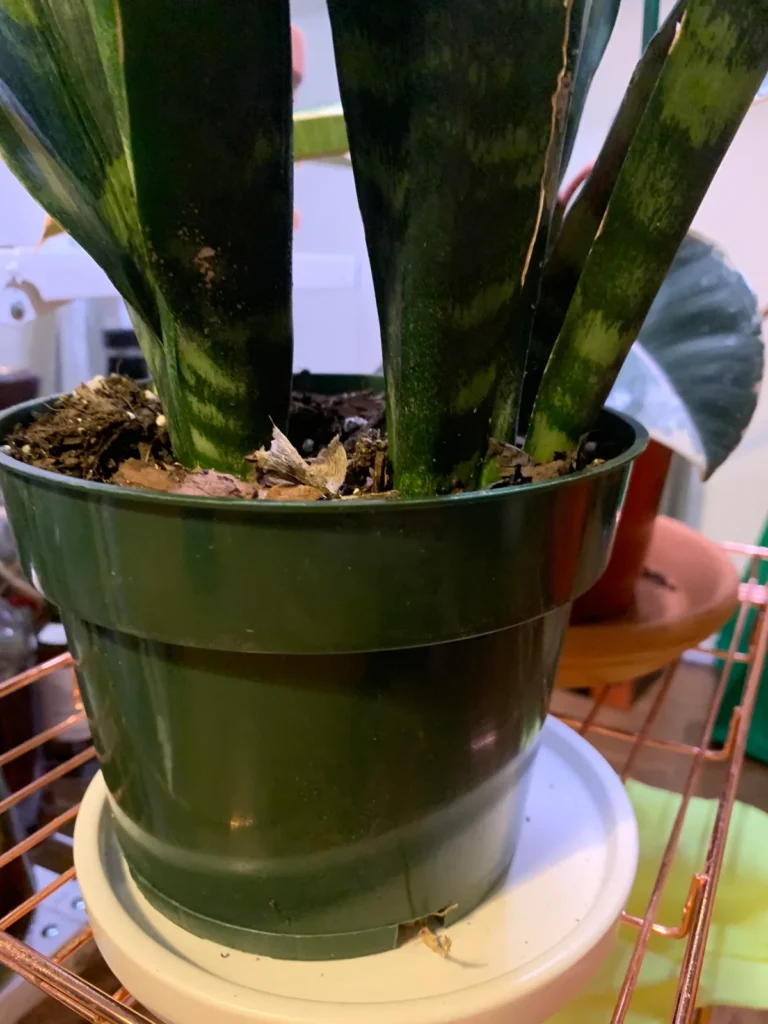
You’ve been staring at your snake plant for months wondering why is my snake plant not growing new leaves, and honestly, you’re probably worrying over nothing. Snake plants (Dracaena trifasciata) grow slowly by design. They’re built to survive, not sprint.
Most healthy snake plants produce just one to two new leaves per growing season. That’s normal. If yours hasn’t pushed out a single leaf in over a year, though, something’s blocking growth, and we’ll walk through exactly how to figure out what.

Image source: Bing (Web (fair-use with source credit))
Quick Answer
Snake plants stop growing new leaves for six common reasons. Insufficient light is the biggest culprit. Overwatering or root rot shuts down growth completely.
Rootbound plants run out of space for new rhizomes. Seasonal dormancy from fall through winter is totally normal. Cold exposure below 50°F triggers a protective pause.
Compacted soil blocks roots from spreading.
What Normal Snake Plant Growth Actually Looks Like (And Why You Might Be Worrying Over Nothing)
Snake plants are not fast growers. They’re slow-growing succulents that evolved in dry West African climates where survival beats speed. Expecting a new leaf every few weeks is unrealistic.
A healthy mature snake plant typically produces one to two new leaves per active growing season, which runs from late spring through summer. That’s it. Some years you might see three.
Other years, especially after repotting or a stressful winter, you might see none.
New growth emerges from the rhizome base, not from existing leaves. You’ll notice a tightly rolled leaf pushing up from the soil, usually near the mother plant. It unfurls over several weeks.
The whole process from emergence to full height can take two to three months.
Younger plants and newly propagated cuttings grow even slower. A leaf cutting can take six to eight weeks just to form roots, then another year before pushing out its first pup. If you bought or propagated your plant recently, patience is the only fix.
Variegated varieties like ‘Moonshine’ or ‘Laurentii’ grow slower than solid green types because they have less chlorophyll for photosynthesis. If you’ve got a variegated snake plant, expect the lower end of that one-to-two leaf range.
Don’t mistake dormancy for death. From late fall through winter, most snake plants pause all visible growth. Roots may still develop, but you won’t see new leaves until temperatures and daylight hours increase in spring.
That’s six months of nothing, and it’s completely normal.
The 6 Real Reasons Your Snake Plant Stopped Growing New Leaves
Now we’ll break down the actual problems that stop growth outside normal dormancy. Each one has specific symptoms you can check right now.
Light Levels: The Most Misunderstood Factor
Light is the number one limiting factor for snake plant growth. Not watering. Not fertilizer.
Light.
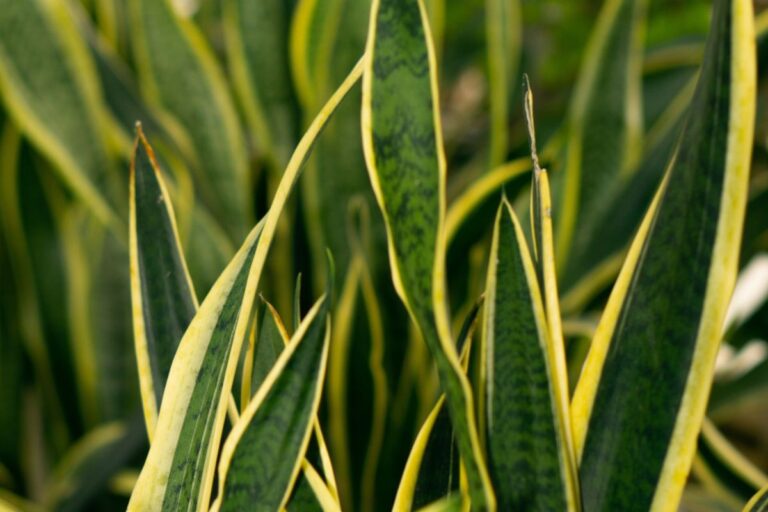
Snake plants tolerate low light, which is why they’re everywhere in offices and dark apartments. But tolerating low light doesn’t mean thriving in it. In true low light (under 200 foot-candles, or a spot where you’d struggle to read without a lamp), your plant survives but won’t grow.

Image source: Bing (Web (fair-use with source credit))
You need at least 200 to 400 foot-candles for slow growth, and 400 to 800 for reliable new leaves each season. That translates to bright indirect light for four to six hours daily, or a spot within three to five feet of an east or west-facing window.
If your plant sits in a dim corner, more than eight feet from any window, or in a room with north-facing light only, that’s your problem. The plant has enough energy to maintain existing leaves but not enough to produce new ones. Our guide on natural light levels explains the specifics.
Direct sun isn’t necessary and can actually scorch leaves, especially if you suddenly move a low-light-adapted plant into bright sun. Bright indirect or filtered light through a sheer curtain is ideal.
Check your light by observing the plant over a week. If the room is bright enough to work comfortably without turning on overhead lights during the day, your light is probably adequate. If you need artificial light before evening, it’s too dim.
Supplementing with a grow light works if your space truly lacks windows. Position an LED grow light six to twelve inches above the plant for 10 to 12 hours daily during the growing season.
Watering Problems: Too Much, Too Little, or Wrong Timing
Overwatering kills more snake plants than anything else. It also stops growth dead because waterlogged roots can’t absorb nutrients or oxygen.
Snake plants store water in their thick leaves and prefer to dry out completely between waterings. In most indoor conditions, that means watering every two to six weeks depending on pot size, soil type, temperature, and humidity. If you’re watering weekly or keeping soil consistently moist, you’re overwatering.
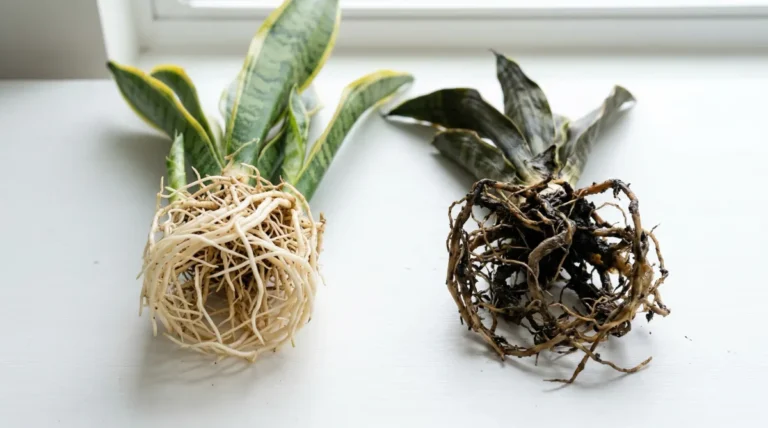
Root rot sets in when roots sit in wet soil for days. The roots turn brown or black, feel mushy, and smell foul. Once rot starts, the plant shuts down all growth to focus on survival.
You’ll also notice leaves turning yellow, soft, or droopy.
To check for root problems, unpot the plant and inspect the rhizomes and roots. Healthy roots are firm, white to tan, and slightly fibrous. Rotted roots fall apart when touched.
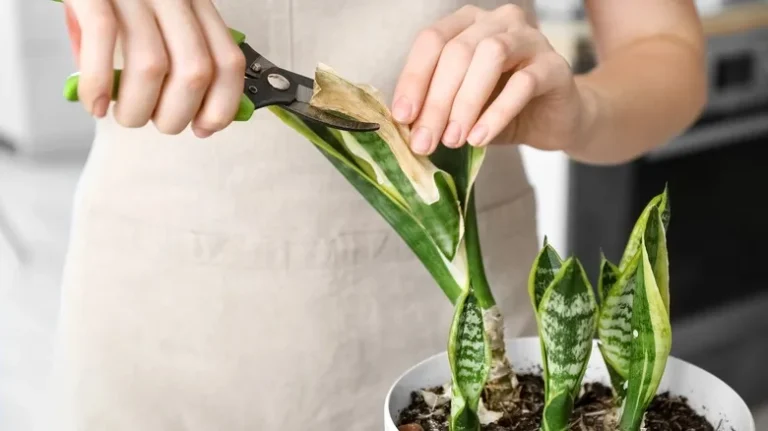
If you find rot, trim away all damaged tissue with sterilized scissors, let the rhizome dry for 24 hours, and repot in fresh well-draining soil.
Underwatering is less common but still possible. If leaves wrinkle, fold inward, or feel papery, the plant is too dry. This usually happens in very hot, dry climates or if the plant is forgotten for months.
A good deep watering will fix it, but expect a recovery period before new growth resumes.
Watering during dormancy is a common mistake. From October through February in the Northern Hemisphere, reduce watering frequency by half or more. The plant isn’t actively growing, so it uses very little water.
Overwatering during dormancy invites rot.
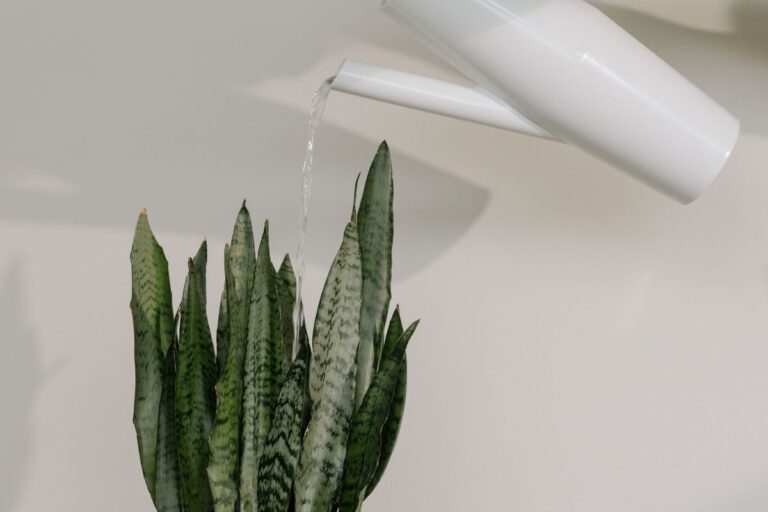
Use the finger test before every watering. Stick your finger two inches into the soil. If it’s damp, wait.
If it’s bone dry, water thoroughly until water drains from the bottom, then empty the saucer. Never let the pot sit in standing water.
Rootbound Plants and Pot Size Issues
Snake plants actually like being slightly rootbound. It encourages pup production and keeps the plant stable. But there’s a limit.
When the rhizomes completely fill the pot with no room to expand, growth stops. You’ll see roots circling the inside of the pot, poking out drainage holes, or pushing the plant upward out of the soil. The soil dries out extremely fast because there’s more root than medium.
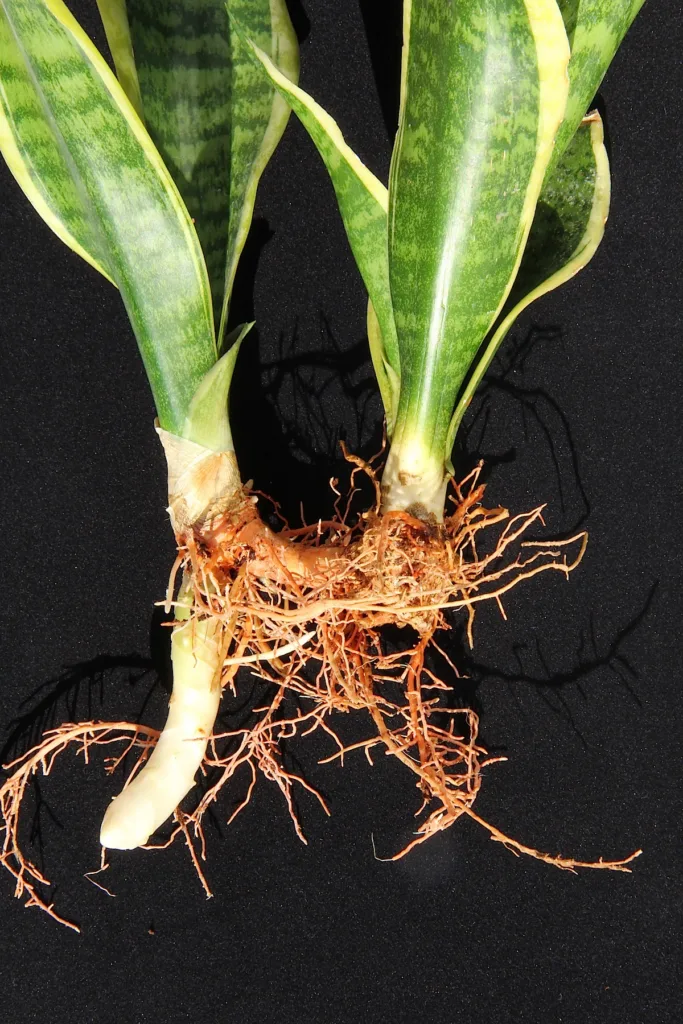
Image source: Bing (Web (fair-use with source credit))
Unpot the plant to check. If you see a solid mass of rhizomes with little visible soil, it’s time to repot. If there’s still visible soil and space around the edges, it’s not rootbound yet.
Repot in spring, right before the growing season kicks in. Choose a pot two to three inches larger in diameter than the current one. Snake plants have shallow, spreading root systems, so width matters more than depth, though you still need at least 10 inches of depth for mature plants.
Use a well-draining mix designed for succulents or cacti. Standard potting soil holds too much moisture. A mix of potting soil, perlite, and coarse sand in a 2:1:1 ratio works well.
For specific recipes, check our breakdown of the best potting mix.
Terracotta pots are better than plastic because they wick moisture away from roots and provide better aeration. Whatever pot you choose, drainage holes are non-negotiable.
After repotting, expect a recovery period of four to eight weeks before you see new growth. The plant is adjusting to fresh soil and repairing any roots damaged during the process. Don’t fertilize immediately after repotting.
Wait until the next growing season.
Seasonal Dormancy: When “Not Growing” Is Completely Normal
If your plant stopped growing in October and it’s now January, relax. It’s dormant.
Snake plants enter dormancy when temperatures drop and daylight hours shorten. In the Northern Hemisphere, that’s typically from late September or October through March. In the Southern Hemisphere, it’s the opposite.
During dormancy, all visible growth pauses. The plant conserves energy and water. Roots may still develop slowly underground, but you won’t see new leaves.
This is not a problem. It’s biology.
Indoor plants experience dormancy less intensely than outdoor ones, but they still respond to seasonal light changes. Even in a heated home, shorter winter days signal the plant to rest.
Don’t try to force growth during dormancy by increasing water, adding fertilizer, or moving the plant to a warmer spot. That stresses the plant and can trigger rot or pest problems. Just reduce watering frequency and wait.
Growth resumes naturally in spring when temperatures rise above 60°F consistently and daylight extends past 12 hours. You’ll typically see the first new leaf between late March and May, depending on your climate and indoor conditions.
If you want to track dormancy, note when your plant last produced a leaf and compare it to your local seasons. If it stopped growing in June, that’s not dormancy. That’s one of the other problems on this list.
Temperature Drops and Cold Stress
Snake plants are tropical by origin and shut down completely when temperatures drop below 50°F. Anything below 40°F causes permanent tissue damage.
Cold stress doesn’t always kill the plant, but it stops all growth for months. Leaves may develop brown, water-soaked spots. The plant pulls resources inward to protect the rhizome.
Recovery is slow.
Check the temperature where your plant lives. Avoid placing it near drafty windows, exterior doors, air conditioning vents, or unheated rooms in winter. Even a few hours of exposure to cold drafts can trigger a growth pause.
Optimal growth happens between 60°F and 85°F. The plant tolerates up to 90°F if humidity is reasonable. Below 55°F, growth slows noticeably even if the plant looks healthy.
If you suspect cold damage, move the plant to a warmer spot with stable temperatures. Don’t try to “warm it up” rapidly with heat lamps or heaters. Gradual adjustment is better.
Resume normal care and wait for spring.
Soil Compaction and Drainage Problems
Over time, potting soil breaks down. Organic matter decomposes, perlite migrates to the surface, and the remaining soil compacts into a dense mass that roots can’t penetrate.
Compacted soil also drains poorly. Water pools on the surface or runs straight through without actually soaking the root ball. Either way, the plant can’t access moisture or oxygen effectively, and growth stops.
If water sits on the soil surface for more than a few seconds before absorbing, or if it drains out the bottom in under five seconds without wetting the soil, your medium is spent.
Another sign is a visible crust or hard layer on the soil surface. You might also notice the soil pulling away from the pot edges when dry.
The fix is repotting into fresh soil with proper aeration. You can reuse the same pot if it’s not rootbound. Just replace all the old medium.
Gently loosen the root ball before replanting to encourage outward growth into the new soil.
Hard water can also contribute to compaction by depositing minerals in the soil over time. If your tap water leaves white crusty buildup on the pot rim or soil surface, consider using filtered or distilled water, or flush the soil every few months by running water through it for a minute to dissolve accumulated salts.
How to Diagnose Your Specific Snake Plant (Step-by-Step Troubleshooting)
Now that you know the six causes, here’s how to figure out which one is affecting your plant. Work through these checks in order.
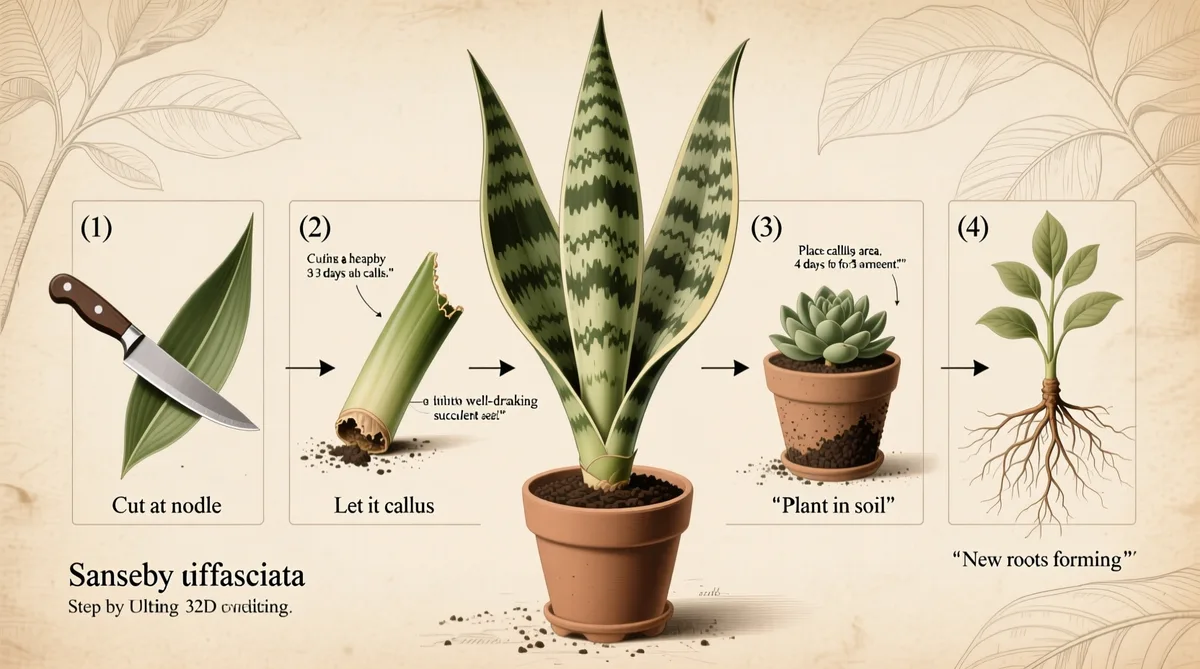
Image source: Bing (Web (fair-use with source credit))
Step 1: Check the calendar. What month is it? If you’re in the fall or winter months (October through February in the Northern Hemisphere), dormancy is the most likely explanation. Note when the plant last grew and compare it to seasonal patterns.
If it stopped in late summer or early fall, just wait for spring.
Step 2: Assess light conditions. Stand where your plant is and look around. Can you comfortably read a book without turning on a light during midday? If not, light is your problem.
Measure the distance from the nearest window. If it’s more than six feet, or the window faces north only, the plant isn’t getting enough light for growth.
Step 3: Check soil moisture. Stick your finger two inches into the soil. Is it damp or wet? If yes, and it’s been more than a week since you watered, you’ve got a drainage or overwatering issue.
If the soil is bone dry and crumbly, and leaves look wrinkled, you’re underwatering.
Step 4: Inspect the roots. Gently unpot the plant or at least check the drainage holes. Are roots circling the pot or poking out the bottom? That’s rootbound.
Are they brown, mushy, or foul-smelling? That’s root rot. Healthy roots should be firm, white to tan, and fibrous.
Step 5: Review your environment. What’s the temperature where the plant lives? Has it been exposed to cold drafts, air conditioning vents, or temperatures below 55°F recently? Cold stress can halt growth for months even after conditions improve.
Step 6: Examine the soil itself. Does water pool on the surface or run straight through without wetting the root ball? Does the soil look crusty or pull away from the pot sides? Old compacted soil needs replacing regardless of pot size.
Most of the time, you’ll identify the problem in the first three steps. Light and watering issues account for about 80% of growth stalls based on aggregate user reports across houseplant forums and extension resources.
What to Do Once You’ve Identified the Problem
Here’s the action plan for each diagnosis. Some fixes are immediate. Others require patience.
Fixing Light Issues
Move the plant closer to a window. Aim for a spot within three to five feet of an east or west-facing window, or right next to a south-facing window with a sheer curtain to diffuse direct sun.
If you don’t have adequate natural light, add a full-spectrum LED grow light. Position it six to twelve inches above the plant. Run it for 10 to 12 hours daily during the growing season (spring through summer).
Our recommendations on supplemental lighting options cover the specifics.
Don’t expect immediate results. The plant needs four to six weeks to adjust to higher light levels and ramp up photosynthesis. New growth typically appears two to three months after you improve light conditions, assuming it’s during the active growing season.
Avoid moving a low-light-adapted plant straight into direct sun. The leaves will burn. Transition gradually over two weeks, moving the plant a foot closer to the window every few days.
Correcting Watering and Root Health
If you found root rot, act immediately. Unpot the plant and rinse the roots under lukewarm water. Use sterilized scissors or pruning shears to cut away all brown, mushy, or foul-smelling tissue.
Cut back to firm, healthy rhizome.
Let the trimmed plant sit on a towel for 24 hours to air-dry and callus the cuts. This prevents new rot from forming when you replant. Repot in completely fresh, dry succulent mix.
Don’t water for one week to let roots settle.
After the waiting period, resume watering using the finger-test method. Water only when the top two inches of soil are completely dry. In most homes, that’s every three to four weeks in summer, every four to six weeks in winter.
If underwatering was the issue, give the plant a thorough soak until water runs from the drainage holes. Repeat in a few days if leaves are severely wrinkled. Once leaves plump up, return to normal watering frequency.
For ongoing watering, match frequency to your environment. Hot, dry homes need more frequent watering. Cool, humid spaces need less.
The soil, not the calendar, tells you when to water.
Repotting a Rootbound Snake Plant
Choose a pot two to three inches larger in diameter than the current one. Terracotta is ideal for moisture control. Confirm the new pot has drainage holes.
Prepare your soil mix before unpotting. Combine two parts potting soil, one part perlite, and one part coarse sand. Or buy a pre-mixed succulent and cactus blend.
Avoid standard potting soil, which holds too much water.
Unpot the plant and gently loosen the root ball with your fingers. Don’t worry if a few roots break. Trim any dead or damaged roots with clean scissors.
Place a layer of soil in the new pot, center the plant, and fill around the sides.
Water lightly after repotting, just enough to settle the soil. Don’t drench it. Wait one week, then resume normal watering.
Don’t fertilize for at least eight weeks. Fresh soil contains enough nutrients.
Expect a recovery period of four to eight weeks. The plant is adjusting and repairing roots. New growth typically appears two to four months after repotting, assuming you’re in the growing season.
Adjusting Care for Dormancy
If dormancy is the cause, do nothing. Just wait for spring.
Reduce watering frequency by half during dormancy. If you normally water every three weeks, stretch it to six. The plant uses very little water when not actively growing.
Monitor soil closely and water only when bone dry.
Don’t fertilize at all from October through February. Fertilizer in dormancy causes salt buildup and root burn because the plant isn’t absorbing nutrients.
Keep temperatures stable between 55°F and 75°F. Avoid cold drafts but don’t overheat the plant either. Stable, moderate conditions are best.
Resume normal care in early spring when you notice temperatures consistently above 60°F and daylight hours increase. You’ll usually see the first new leaf between March and May.
The Biggest Mistakes People Make Trying to Force Growth
Knowing what not to do is just as important as knowing the fixes. Here are the errors that make the problem worse.
Over-fertilizing. Snake plants are light feeders. They need fertilizer once in spring and once in midsummer at half the recommended strength. More than that causes salt buildup, burns roots, and actually stunts growth.
Never fertilize during dormancy or right after repotting. If you’ve been fertilizing monthly, stop immediately and flush the soil with plain water.
Repotting too often. Repotting stresses the plant and triggers a recovery period where growth pauses. Only repot when genuinely rootbound, which is typically every three to five years. Moving a plant to a bigger pot “to give it room to grow” before it needs it can lead to overwatering because excess soil stays wet longer.
Watering on a schedule. Watering every week or every two weeks regardless of soil conditions is the fastest way to kill a snake plant. Seasonal changes, humidity, temperature, and pot size all affect how quickly soil dries. Always check soil moisture before watering.
The plant, not the calendar, decides when it needs water. For guidance on frequency, see our breakdown of watering best practices.
Misting leaves. Snake plants don’t need or benefit from misting. They’re adapted to dry air. Misting increases humidity around leaves, which can encourage fungal problems and pest infestations like spider mites.
If leaves look dusty, wipe them with a damp cloth instead.
Ignoring drainage. Putting a snake plant in a pot without drainage holes, or leaving it sitting in a decorative cache pot filled with water, guarantees root rot. Drainage is non-negotiable for these plants. If you love a pot without holes, use it as a decorative sleeve and keep the plant in a plastic nursery pot with drainage inside it.
Expecting fast results. Even after you fix the problem, new growth takes time. Snake plants grow slowly. You’re looking at two to four months minimum before you see a new leaf, and only if you made the fix during the active growing season.
Patience is required.
Frequently Asked Questions
How long does it take for a snake plant to grow new leaves?
A healthy snake plant produces one to two new leaves per growing season, typically between late spring and late summer. Each leaf takes two to three months from emergence to full height. If conditions aren’t ideal, growth slows or stops entirely.
Can I use fertilizer to make my snake plant grow faster?
Fertilizer helps only if the plant is already receiving adequate light and water. Use a balanced liquid fertilizer diluted to half strength once in spring and once in summer. More fertilizer won’t speed growth and can burn roots.
Never fertilize during fall or winter dormancy.
Should I cut off old leaves to encourage new growth?
No. Cutting healthy leaves doesn’t trigger new growth and reduces the plant’s ability to photosynthesize. Only remove leaves that are completely dead, damaged, or diseased.
New leaves emerge from the rhizome base, not from where you cut.
Why is my snake plant growing but the leaves are thin and pale?
Thin, pale leaves indicate insufficient light. The plant is etiolating, stretching toward available light and producing weak growth. Move it to a brighter location with four to six hours of indirect light daily.
The existing thin leaves won’t change, but new growth will be thicker and darker.
How do I know if my snake plant is dormant or dying?
A dormant plant has firm, upright leaves with consistent color and no signs of rot or damage. A dying plant shows yellowing leaves, mushy stems, foul odor, or leaves that collapse when touched. Check the roots.
Firm white or tan roots mean dormancy. Brown mushy roots mean rot.
Can overwatering permanently stop a snake plant from growing?
Overwatering causes root rot, which can kill the plant if not addressed. If caught early and the rotted roots are trimmed away, the plant can recover, but it may take six months to a year before normal growth resumes. Severe rot that reaches the rhizome is often fatal.
What to Do Once You’ve Identified the Problem
Here’s the action plan for each diagnosis. Some fixes are immediate. Others require patience.
Fixing Light Issues
Move the plant closer to a window. Aim for a spot within three to five feet of an east or west-facing window, or right next to a south-facing window with a sheer curtain to diffuse direct sun.
If you don’t have adequate natural light, add a full-spectrum LED grow light. Position it six to twelve inches above the plant. Run it for 10 to 12 hours daily during the growing season (spring through summer).
Don’t expect immediate results. The plant needs four to six weeks to adjust to higher light levels and ramp up photosynthesis. New growth typically appears two to three months after you improve light conditions, assuming it’s during the active growing season.
Avoid moving a low-light-adapted plant straight into direct sun. The leaves will burn. Transition gradually over two weeks, moving the plant a foot closer to the window every few days.
Correcting Watering and Root Health
If you found root rot, act immediately. Unpot the plant and rinse the roots under lukewarm water. Use sterilized scissors or pruning shears to cut away all brown, mushy, or foul-smelling tissue.
Cut back to firm, healthy rhizome.
Let the trimmed plant sit on a towel for 24 hours to air-dry and callus the cuts. This prevents new rot from forming when you replant. Repot in completely fresh, dry succulent mix.
Don’t water for one week to let roots settle.
After the waiting period, resume watering using the finger-test method. Water only when the top two inches of soil are completely dry. In most homes, that’s every three to four weeks in summer, every four to six weeks in winter.
If underwatering was the issue, give the plant a thorough soak until water runs from the drainage holes. Repeat in a few days if leaves are severely wrinkled. Once leaves plump up, return to normal watering frequency based on your plant’s specific needs.
Repotting a Rootbound Snake Plant
Choose a pot two to three inches larger in diameter than the current one. Terracotta is ideal for moisture control. Confirm the new pot has drainage holes.
Prepare your soil mix before unpotting. Combine two parts potting soil, one part perlite, and one part coarse sand. Or buy a pre-mixed succulent and cactus blend.
Unpot the plant and gently loosen the root ball with your fingers. Don’t worry if a few roots break. Trim any dead or damaged roots with clean scissors.
Place a layer of soil in the new pot, center the plant, and fill around the sides.
Water lightly after repotting, just enough to settle the soil. Don’t drench it. Wait one week, then resume normal watering.
Expect a recovery period of four to eight weeks before new growth appears.
Adjusting Care for Dormancy
If dormancy is the cause, do nothing. Just wait for spring.
Reduce watering frequency by half during dormancy. If you normally water every three weeks, stretch it to six. The plant uses very little water when not actively growing.
Don’t fertilize at all from October through February. Fertilizer in dormancy causes salt buildup and root burn because the plant isn’t absorbing nutrients. Keep temperatures stable between 55°F and 75°F.
Resume normal care in early spring when temperatures consistently stay above 60°F and daylight hours increase. You’ll usually see the first new leaf between March and May.
The Biggest Mistakes People Make Trying to Force Growth
Knowing what not to do is just as important as knowing the fixes. Here are the errors that make the problem worse.
Over-fertilizing. Snake plants are light feeders. They need fertilizer once in spring and once in midsummer at half the recommended strength. More than that causes salt buildup, burns roots, and actually stunts growth.
Never fertilize during dormancy or right after repotting.
Repotting too often. Repotting stresses the plant and triggers a recovery period where growth pauses. Only repot when genuinely rootbound, which is typically every three to five years. Moving a plant to a bigger pot “to give it room to grow” before it needs it can lead to overwatering.
Watering on a schedule. Watering every week or every two weeks regardless of soil conditions is the fastest way to cause problems. Seasonal changes, humidity, temperature, and pot size all affect how quickly soil dries. Always check soil moisture before watering.
Misting leaves. Snake plants don’t need or benefit from misting. They’re adapted to dry air. Misting increases humidity around leaves, which can encourage fungal problems and pest infestations like spider mites.
Ignoring drainage. Putting a snake plant in a pot without drainage holes, or leaving it sitting in a decorative cache pot filled with water, guarantees root rot. Drainage is non-negotiable for these plants.
Expecting fast results. Even after you fix the problem, new growth takes time. You’re looking at two to four months minimum before you see a new leaf, and only if you made the fix during the active growing season.