How to Save a Snake Plant from Root Rot
Snake plant root rot is the single most common killer of these tough succulents, and it’s almost always a watering problem. The good news is that if you catch it early, the odds of saving your plant are surprisingly high.
Per the American Society for Horticultural Science, Sansevieria (now classified as Dracaena trifasciata) can survive weeks without water because of its CAM photosynthesis system. That resilience works against it when owners water too often, the roots simply suffocate and decay. Let’s walk through the signs and exactly what to do next.
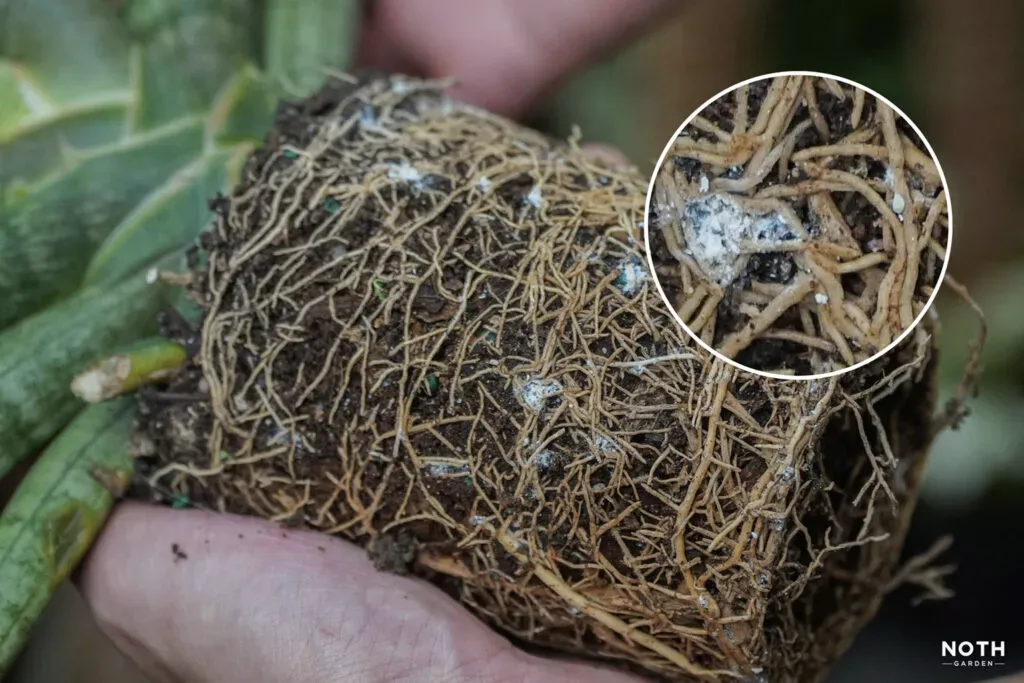
Image source: Bing (Web (fair-use with source credit))
Quick Answer
Snake plant root rot is caused by overwatering. Remove the plant from its pot. Cut away all mushy, dark roots.
Repot in dry cactus soil. Water nothing for at least ten days. If all roots are gone, cut healthy leaves and root them in water.
How to Tell How Bad the Rot Is (Mild vs Severe)
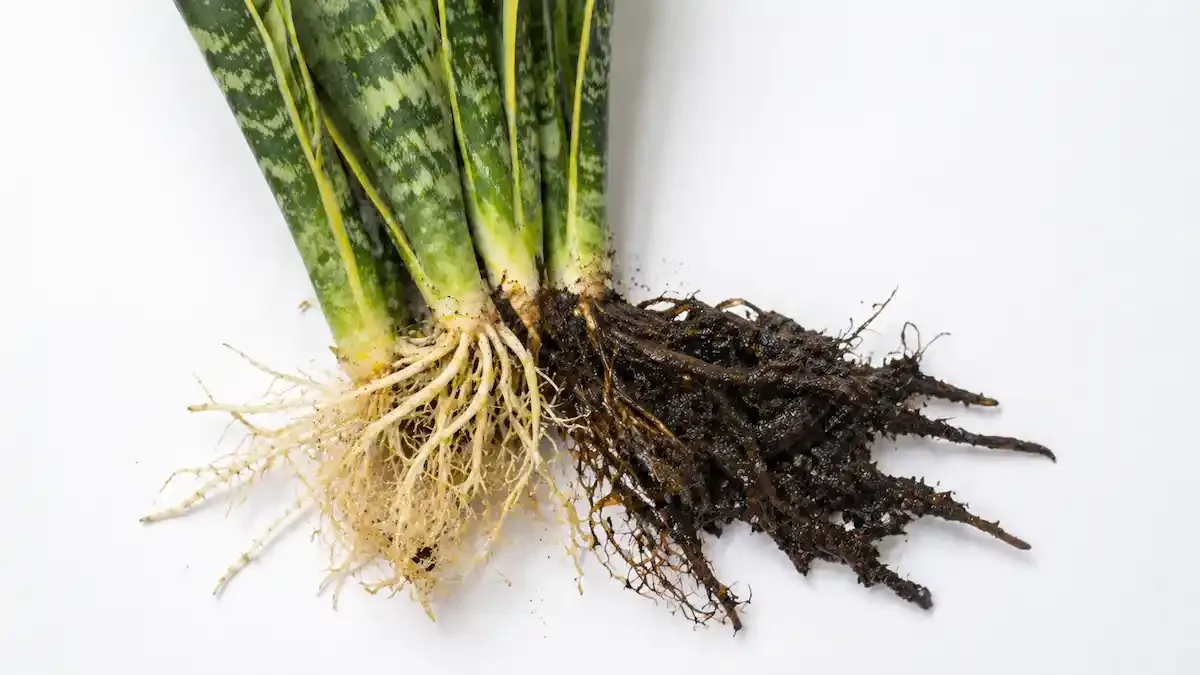
Image source: Bing (Web (fair-use with source credit))
You need to decide quickly: is this a trim-and-repot situation, or a last-resort propagation? The difference is in the roots and the rhizome (the thick underground stem).
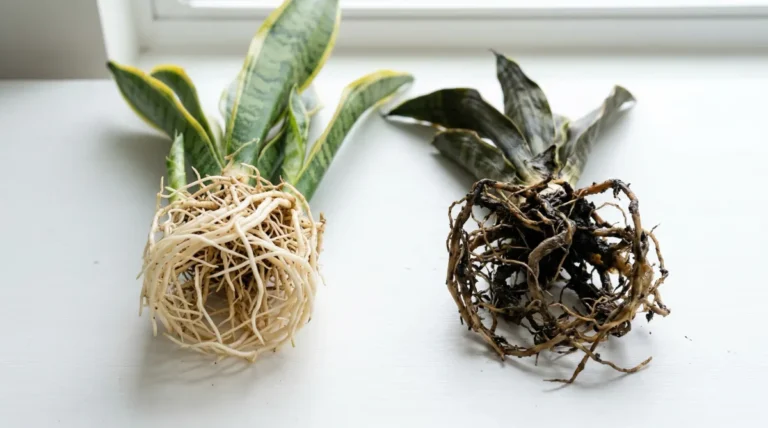
Mild rot means the roots are mostly white or light tan. A few are brown and mushy, but the rhizome feels firm when you squeeze it. The leaves may look a bit yellow or floppy, but they still hold their shape.
This is the easy fix, you simply cut the bad roots off and repot in fresh, dry mix.
Severe rot means the rhizome itself is soft, squishy, or has dark, waterlogged patches. The roots are mostly gone, just brown slime and a bad smell. Leaves may be falling over or pulling away from the base.
In this case, trimming the roots isn’t enough. You have to go straight to leaf propagation.
A quick smell test helps. Healthy soil smells earthy. Rotted soil smells sour, like a wet basement or decay.
If that sour hit is strong, the rot is widespread.
The Two-Path Rescue Workflow

Image source: Web (Bing) / storage.googleapis.com (Web image (fair-use with source credit))
The right path depends entirely on how much healthy material is left. Here’s the workflow for each scenario.
Path A: If the Roots Are Still Decent – Trim and Repot
Start by pulling the plant out of its pot. Gently shake or rinse off as much old soil as you can. Then, with sterilized scissors or pruning shears, cut away every root that is brown, mushy, or stringy.
Be aggressive, leaving even a small infected piece can spread.
Rinse the remaining healthy roots in a 1:4 mix of 3% hydrogen peroxide and water. This kills any lingering fungal spores. Let the roots air dry on a paper towel for 24 to 48 hours.
Do not skip this step. Wet wounds rot again fast.
Repot in a clean pot with fresh cactus or succulent mix. Do not water for at least ten days. Then water very lightly, waiting until the soil is fully dry before watering again.
Path B: If the Roots Are Completely Gone – Leaf Propagation
When the rhizome is soft or all roots are dead, don’t try to save the base. Instead, cut healthy leaves from the plant. Use a clean knife.
Cut each leaf into sections about 4 to 6 inches long. Let the cut ends callus over for a day or two.
Place the cut ends in a jar with an inch of water. Change the water every five to seven days. Roots should appear in two to four weeks.
Once roots are about an inch long, pot them in succulent soil. Water sparingly until the new plant is established.
Common Mistakes That Kill the Plant After Rescue
The biggest mistake is watering too soon after repotting. You see fresh soil and think it needs a drink. Actually, the roots need time to heal.
Watering before they form a callus invites rot right back in.
Another common error is using the same pot without sterilizing it first. Terracotta and plastic pots can harbor fungal spores. Wash the pot with hot, soapy water, then rinse with diluted bleach (one part bleach to nine parts water).
Alternatively, use a brand new pot.
People also use regular potting soil or garden soil. These hold too much moisture for snake plants. Use a mix that includes perlite, pumice, or coarse sand to improve drainage.
Heavy soil is a slow death sentence.
Finally, leaving the plant in a humid or dim spot after repotting slows recovery. Place it in bright, indirect light with good air movement. A bathroom with low light and high humidity is the worst place for a healing snake plant.
Setting Up for Success: Potting Mix, Pot, and Aftercare
Image source: Web (Bing) / agrifarming.in (Web image (fair-use with source credit))
The right pot and soil are what keep root rot from coming back. Let’s break down the choices.
Pot type. Terracotta is ideal because it wicks moisture away from the soil. Plastic and glazed ceramic pots hold more water. If you use plastic, water even less often, maybe once every three to four weeks.
Pot size. Use a pot that is only one to two inches wider than the root ball. A big pot with lots of extra soil stays wet longer and encourages rot.
Potting mix. Cactus or succulent mix is a good start, but you can make it even better. Mix one part regular succulent soil with one part perlite or pumice. This creates a fast-draining mix that dries out within a few days.
Aftercare schedule. After repotting, water only when the top two inches of soil are bone dry. Stick your finger in. If it feels damp, wait.
In winter, you might water only once a month. Snake plants grow slowly and use very little water.
A final tip: always lift the pot to check weight. A dry pot feels light. A wet pot feels heavy.
After a few weeks, you’ll know the difference by feel alone.
How to Prevent Root Rot in the First Place
Prevention is far easier than rescue. The single most effective change you can make is to water less often.
Wait until the soil is completely dry before watering again. Stick your finger two inches deep. If it feels damp, wait another week.
In winter, you might go four to six weeks between waterings.
Choose a pot with drainage holes. No exceptions. A decorative cache pot without holes traps water at the bottom.
If you love the look, keep the snake plant in a plain nursery pot inside the decorative one. Lift it out to water and let it drain fully before putting it back.
Use light, fast-draining soil. A mix of cactus soil and perlite (equal parts) works well. Avoid garden soil or standard potting mix.
Those hold too much moisture for snake plants.
Give your plant bright, indirect light. Low light slows down water use. A snake plant in a dim corner stays wet longer.
Move it closer to a window, but avoid direct afternoon sun which can burn the leaves.
Check the pot weight regularly. A dry pot feels light. A wet pot feels heavy.
After a few weeks, you’ll instinctively know when it needs water.
Finally, clean your tools between uses. If you prune a rotten root from one plant, wipe the shears with rubbing alcohol. Fungal spores travel easily on dirty blades.
Follow these habits and root rot becomes a rare event instead of a recurring crisis.
Frequently Asked Questions About Snake Plant Root Rot
How long does it take for a snake plant to recover from root rot?
Expect four to eight weeks for visible recovery. New roots take time to grow. Leaves may look droopy for a month.
If you propagated from leaf cuttings, wait two to three months before you see substantial new growth.
Can I save a snake plant with no roots?
Yes, if the leaves are still firm and green. Cut the leaves into sections and root them in water or damp soil. The original plant base is lost, but each leaf section can become a new snake plant.
Success rate is high with patience.
Should I use hydrogen peroxide for root rot?
A diluted 3% hydrogen peroxide solution (one part peroxide, four parts water) can help kill fungal spores on remaining roots. It is not a cure-all. You must still cut away all rotted tissue and repot in dry soil.
Overuse can damage healthy roots.
What does healthy snake plant soil look like?
Healthy soil is light, crumbly, and drains fast. It should not stay wet for more than a few days after watering. If the soil looks dark, heavy, or stays soggy for a week, it is wrong for snake plants.
Switch to cactus mix with perlite.
Why does my snake plant keep getting root rot?
The most common reason is watering too often. A second cause is using a pot without drainage holes. Third is using heavy soil that holds moisture.
Fix all three and the problem stops. Also check that light is bright enough to drive the plant’s water use.
Can I use fungicide powder on snake plant roots?
Fungicide can help prevent reinfection, but it is not a substitute for removing rotted tissue. Apply a sulfur-based or copper-based fungicide to clean, dry roots before repotting. Follow the label exactly.
Too much fungicide can burn roots.