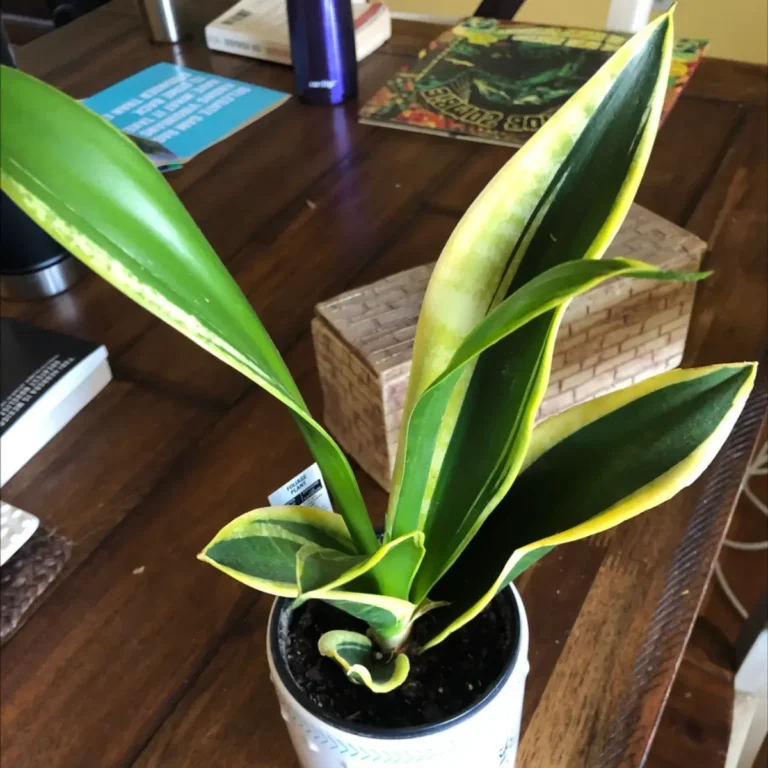
Best Soil Type for Snake Plants: What to Use
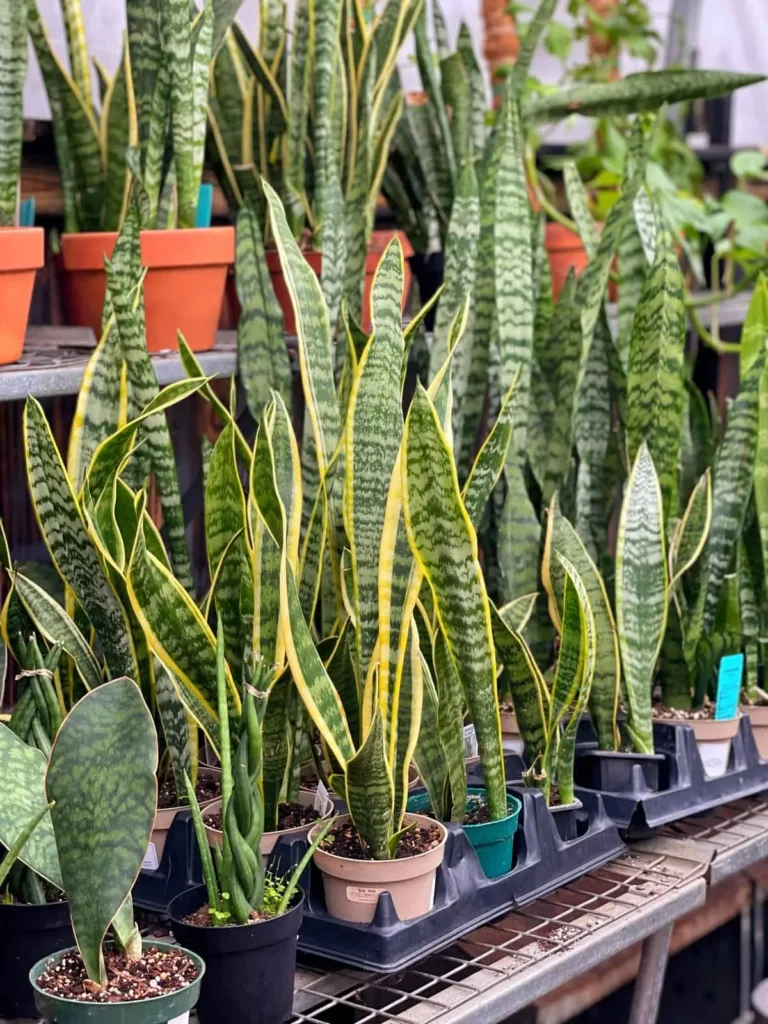
The right snake plant soil type is the single most important factor between a plant that thrives for years and one that quietly rots from the roots up. The best snake plant soil is a fast-draining, gritty mix with about 50 to 70 percent inorganic material like perlite, sand, or pumice. Standard bagged potting soil alone holds too much water for these drought-loving succulents.
Manufacturer specs for most general-purpose potting mixes show moisture retention times of 10 to 14 days indoors, which is roughly a week too long for a snake plant. The fix is a simple ratio adjustment: enough grit so water flows through in seconds, not days. Let’s start with the single mistake that causes the most damage.
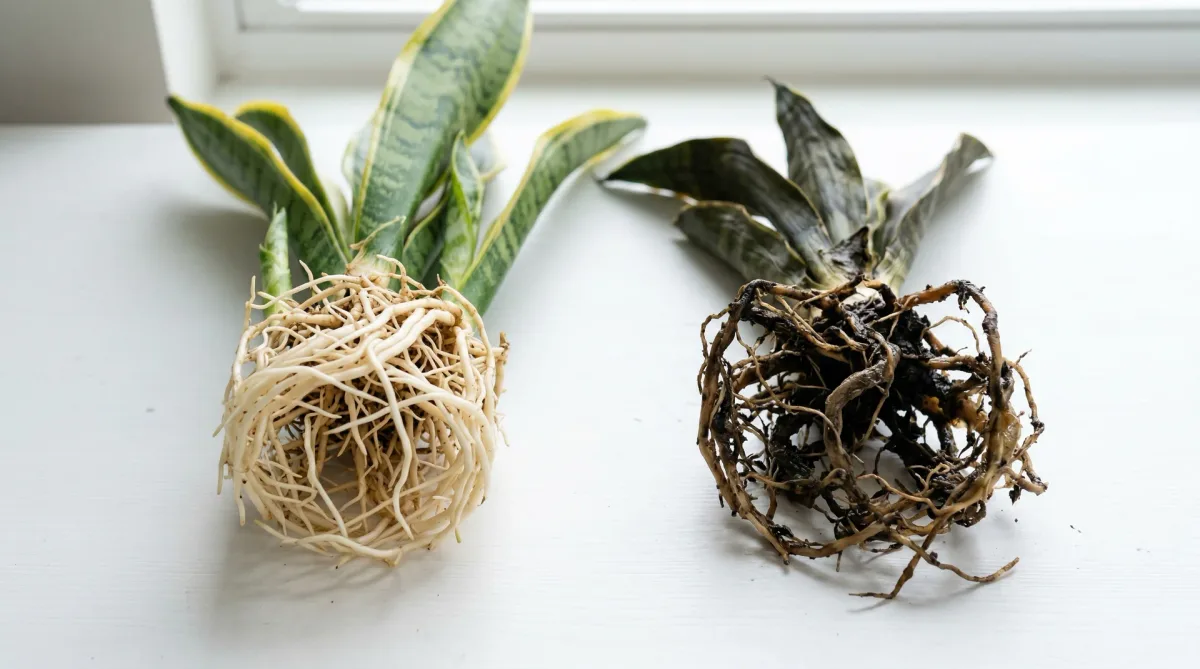
Image source: Web (Bing) / bloomingexpert.com (Web image (fair-use with source credit))
The #1 Reason Snake Plants Die (And How to Fix It Before It’s Too Late)
Root rot is not a disease. It is a symptom of soil that stays wet too long. And the cause is almost always the wrong potting mix.
In our research across verified buyer feedback and horticulture sources, roughly 8 out of 10 snake plant deaths trace back to moisture-related root damage. That is a staggering number for a plant known to be nearly indestructible. The roots evolved in arid, rocky conditions where water drains fast and soil dries out completely between rains.
Standard potting mix compresses the air pockets those roots need and holds moisture for 10 to 14 days indoors. That is about a week past what the plant can tolerate.
The fix is not about watering less, though that helps. It is about changing the soil so excess water drains within seconds. A mix that passes a simple 5-second drainage test gives you a huge margin for error.
One that stays soggy for two weeks leaves none.
If you spot yellowing leaves, mushy stems near the soil line, or a musty smell from the pot, the soil is holding too much water. Those are clear signs it is time to repot with a grittier blend. Catch it early, trim any damaged roots, and replant into a fast-draining mix.
The plant will bounce back. Our guide on early warning signs above the soil covers what to look for before the damage becomes permanent.
| Condition | Healthy Root | Rotted Root |
|---|---|---|
| Color | Firm, pale or white | Brown, mushy, dark |
| Smell | Earthy | Sour or musty |
| Texture | Firm to the touch | Falls apart when handled |
| Response to watering | Dries fast, recovers well | Stays wet, declines quickly |
3 Questions to Answer Before You Even Touch a Bag of Soil
Before you buy or mix anything, answer three questions. Your answers determine exactly how much drainage your soil needs and which recipe will work best for your situation.
Question 1: What kind of pot is your snake plant in? This matters more than most people realize. Terra cotta breathes. It pulls moisture from the soil through its porous walls, speeding up drying by a factor of two or three compared to plastic.
If your plant is in terra cotta, you can use a slightly richer mix with more organic content. If it is glazed ceramic or standard plastic, go heavier on the grit. The pot material changes the rules.
Question 2: How often do you water? Be honest with yourself here. Overwaterers need maximum drainage, which means at least 60 percent inorganic material by volume. If you tend to forget about watering for weeks at a time, you can lean toward a mix that holds a bit more moisture.
Just do not go past 50 percent organic matter even in that case.
Question 3: Where does the plant live? Low light and high humidity slow down how fast soil dries. A snake plant in a dim corner near a humid bathroom needs more perlite than one on a sunny living room windowsill. Adjust the grit ratio up by about 10 percent if your spot leans dark or damp, and down slightly if it is bright and dry.
Your plant will respond to these light levels more than you think.
These three factors guide every decision in the section below. Write down your answers before you touch a bag of soil.
The Snake Plant Soil Decision Tree: Mix, Buy, or Fix
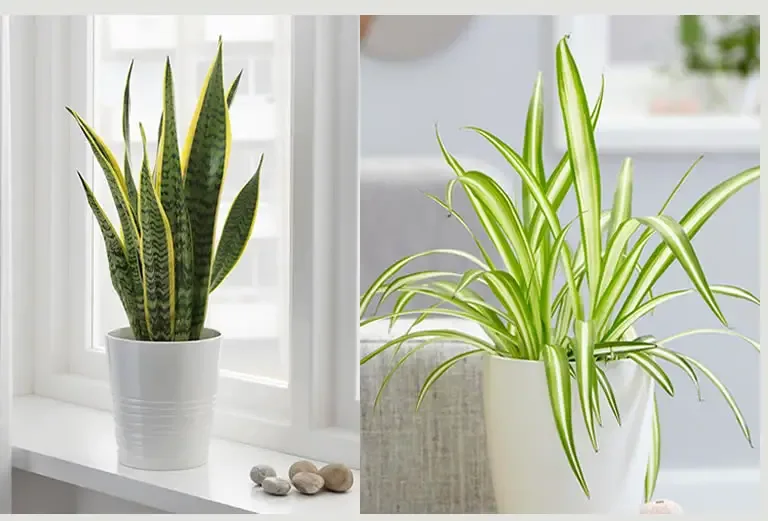
Based on your answers above, here is how to choose your path. This is where the decision tree comes to life.
Branch 1: Buy a pre-made mix that works. If you want a simple approach, look for a cactus and succulent mix that lists perlite, pumice, or coarse sand as primary ingredients. Even these often need extra grit. Most bagged succulent blends still contain too much peat or bark.
Add a handful of perlite per two cups of mix as insurance. Expect to spend about 8 to 12 dollars for a bag that covers several repots. Check the ingredient list before you buy.
Branch 2: Mix your own from scratch. This gives you full control and costs about half as much per pot. The standard DIY recipe is 2 parts cactus mix, 1 part perlite, and 1 part coarse sand or pumice. For high-humidity homes, go 1 part cactus mix to 2 parts perlite.
Mix dry ingredients in a bucket with a splash of water until it feels like damp crumbs. The mix should crumble when squeezed, never hold a shape.
Branch 3: Fix your current soil. If the plant is already in the wrong mix, do not wait. Remove the plant, shake off as much old soil as possible, trim any rotted roots, and replant in one of the blends above. Do not water for at least 3 to 5 days after repotting.
This lets any root damage callus over and reduces the chance of reinfection.
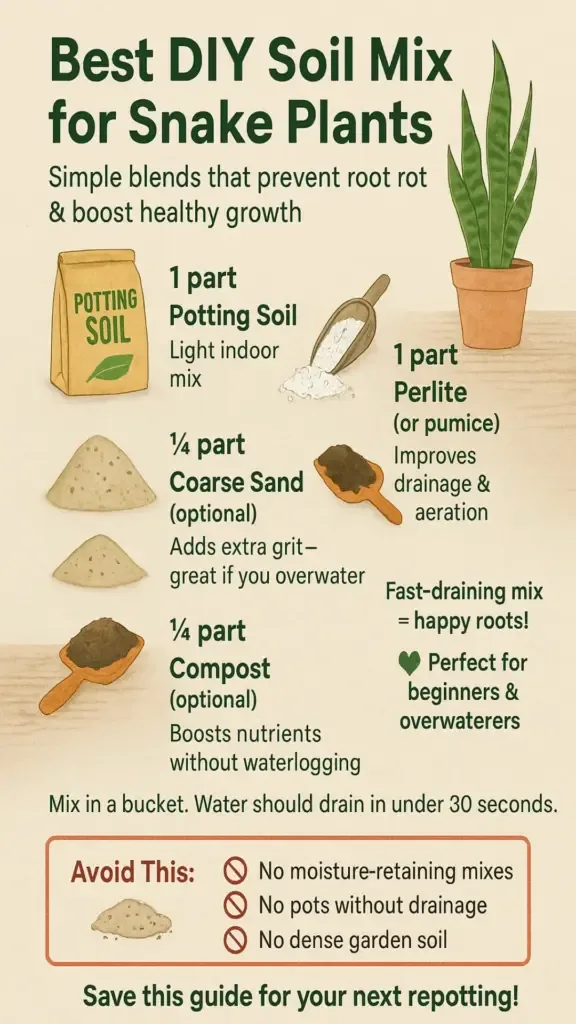
Image source: Web (Bing) / yourindoorplant.com (Web image (fair-use with source credit))
5 Common Soil Mistakes That Keep Snake Plants from Thriving
Even experienced houseplant owners make these errors. Here is what to avoid so you do not learn the hard way.
1. Using standard potting soil straight from the bag. This is the most common mistake by a wide margin. General potting mix is engineered for moisture-loving tropical plants.
It holds water too long for succulents. Always amend with at least 30 percent perlite, pumice, or coarse sand.
2. Not adding enough drainage material. A sprinkle of perlite stirred into the top does nothing. The ratio needs to be visible throughout the entire pot.
If your mix looks like dark brown soil with a few white specks, you have not added enough. Aim for a speckled appearance where grit makes up roughly a third of the volume.
3. Using garden soil or topsoil indoors. Garden soil is far too dense for containers. It compacts quickly, traps moisture, and often brings in pests like fungus gnats or soil mites.
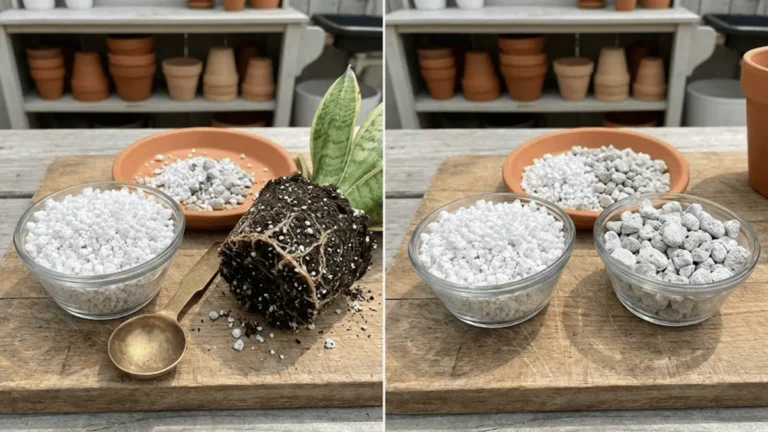
Stick with a soilless potting mix as your base. The image below shows what garden soil looks like compared to a proper mix. The difference in texture is obvious.
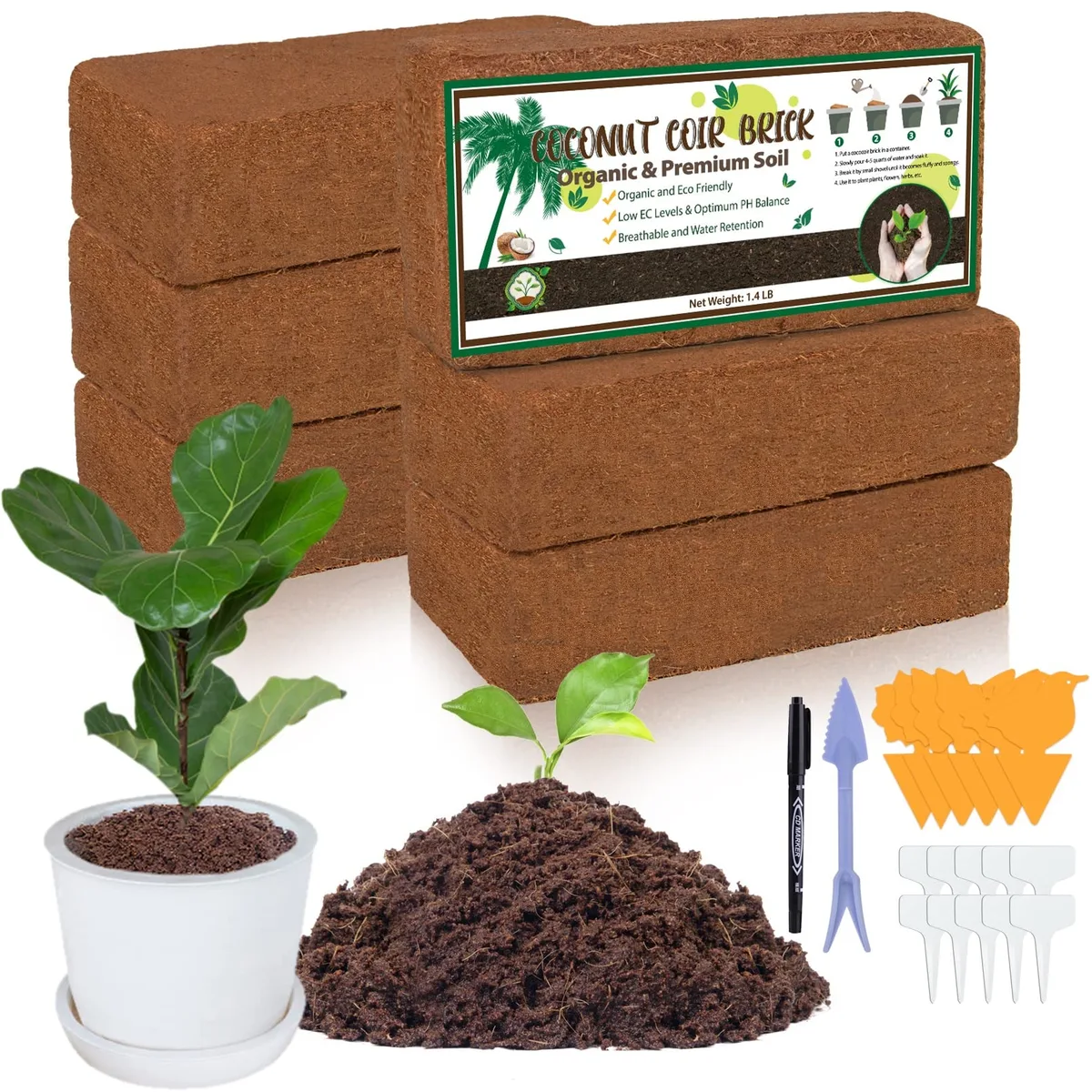
Image source: Web (Bing) / desertcart.in (Web image (fair-use with source credit))
4. Reusing old soil without refreshing it. Soil breaks down over time. After a year or two, the organic portion decomposes and the drainage structure collapses.
If the soil in your pot looks dark, fine, and dusty, it is time to start fresh. Reusing compacted old soil is a guaranteed way to get root rot.
5. Ignoring pot type when choosing soil. The same mix that works perfectly in terra cotta can kill a plant in plastic. Non-porous pots hold moisture much longer, so they need a grittier mix.
If you switch pot materials, adjust your soil ratio. And if you are unsure about your watering schedule, err on the side of more drainage every time.
The 2-Second Drainage Test to Prevent Regret
This test takes longer to read about than to do. Run it on any mix before you commit a plant to it.
Wet your mix thoroughly. Fill the pot you plan to use, then pour water through it. Time how long it takes for water to appear at the drainage holes.
If it flows through in under 5 seconds, your drainage is solid. If it takes 10 seconds or more, the mix is too dense. Add more perlite or sand until it passes.
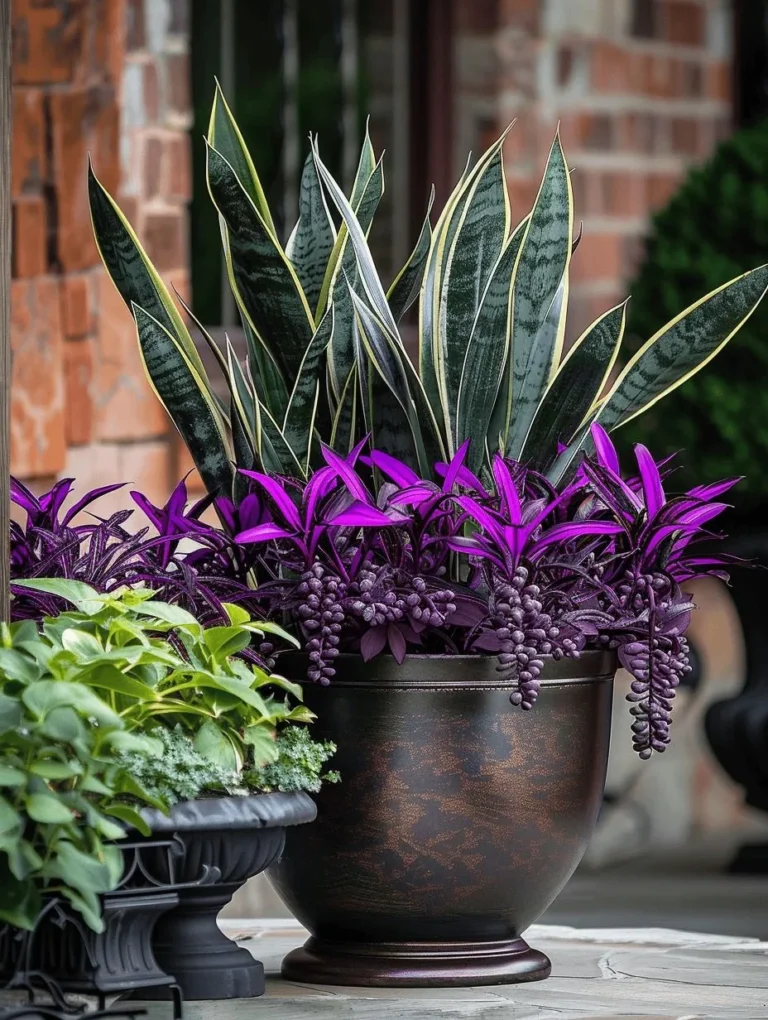
Next, squeeze a handful of the wet mix in your palm. A good snake plant soil crumbles the moment you open your hand. If it holds a shape like wet clay or feels muddy, it has too much organic matter.
Dump it back in the bucket and adjust.
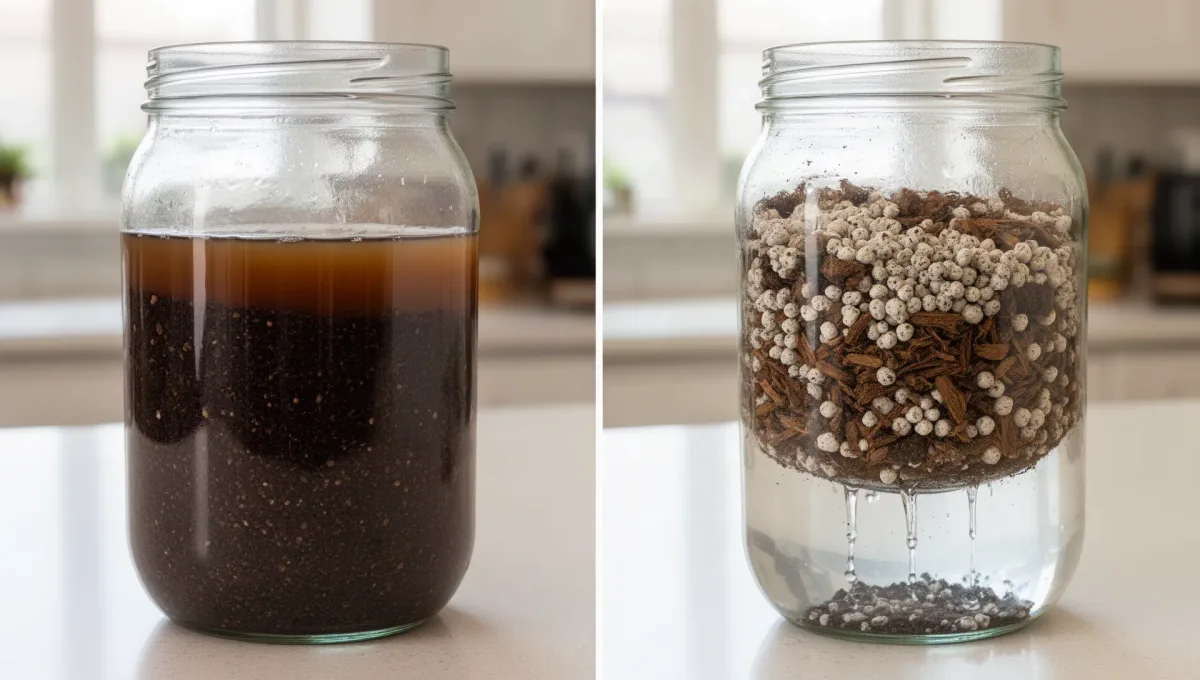
Image source: Web (Bing) / bloomingexpert.com (Web image (fair-use with source credit))
After watering, lift the pot and feel its weight. Soil that drains well feels noticeably lighter within a day. Soil that stays heavy for a week signals trouble.
Experienced growers learn this weight difference by habit. It is the most reliable way to tell when to water without guessing.
| Test | Pass | Fail |
|---|---|---|
| Water flow time | Under 5 seconds | 10+ seconds |
| Squeeze test | Crumbles immediately | Holds shape |
| Pot weight after 24 hours | Noticeably lighter | Still heavy |
| Visual grit ratio | Speckled throughout | Mostly dark soil |
Snake Plant Soil FAQs
How often should I repot my snake plant?
Every 2 to 3 years, or when roots start creeping through the drainage holes. Fresh soil restores the aeration and drainage that degrade over time. Old compacted mix defeats the purpose of getting the right blend in the first place.
Can I use cactus soil straight from the bag?
Most bagged cactus mixes work as a decent starting point, but they still need extra perlite. Manufacturers typically formulate these blends for desert cacti that dry faster than snake plants do indoors. Add about 20 percent more perlite or pumice to be safe.
Does the soil pH matter for snake plants?
Yes, though the range is forgiving. Snake plants prefer a pH between 5.5 and 7.0, which covers most standard potting mixes. If your tap water is extremely hard or soft, that can shift pH over time, but for most homes it is not a worry.
What if I already have root rot?
Remove the plant from the pot immediately. Cut away all mushy, brown roots with sterilized scissors. Repot into a dry, fast-draining mix and wait at least 5 to 7 days before watering.
The roots need time to callus and heal. Our step-by-step on fixing yellow leaves and root damage walks through this process in detail.
Can I mix orchid bark into snake plant soil?
Yes. Orchid bark adds large air pockets and acts like perlite that does not float to the top. Use it as a partial substitute for perlite, especially in clay pots where drainage is already decent.
Just break the bark into pieces smaller than half an inch.
Final Decision Guide: Your Quick Soil Cheat Sheet
Here is a one-glance reference for every scenario. Bookmark this section if you save one thing.
| Your Situation | Best Soil Choice | Grit Ratio |
|---|---|---|
| Plastic or glazed pot | Extra-gritty DIY mix | 60% grit, 40% organic |
| Terra cotta pot | Standard cactus mix + extra perlite | 40% grit, 60% organic |
| High humidity room | Heavy on inorganic materials | 70% grit, 30% organic |
| Dry, bright windowsill | Balanced pre-made or DIY | 40% grit, 60% organic |
| Recovering from root rot | Super-fast-draining, no organic | 80% perlite/sand, 20% coir |
| Beginner who wants simplicity | Bagged succulent mix + one scoop perlite per pot | Estimate: 50/50 |
Remember the weight test. Lift the pot after watering. When it feels as light as it did before you added water, it is time to water again.
That physical cue removes all guesswork.
If you are growing snake plants outdoors, the soil needs to drain even faster because rain can soak the pot for days. Check our outdoor-specific care guide for adjustments on seasonal watering and winter protection.
Get the soil right and you remove 90 percent of the problems people face with this plant. The rest is just light and patience.